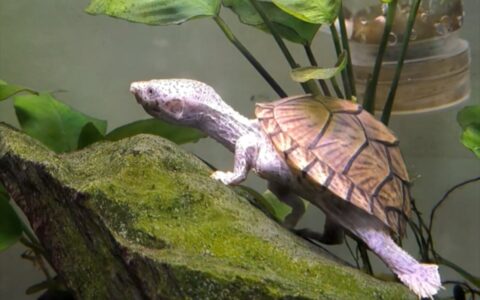
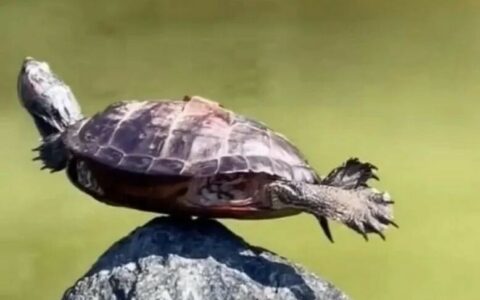
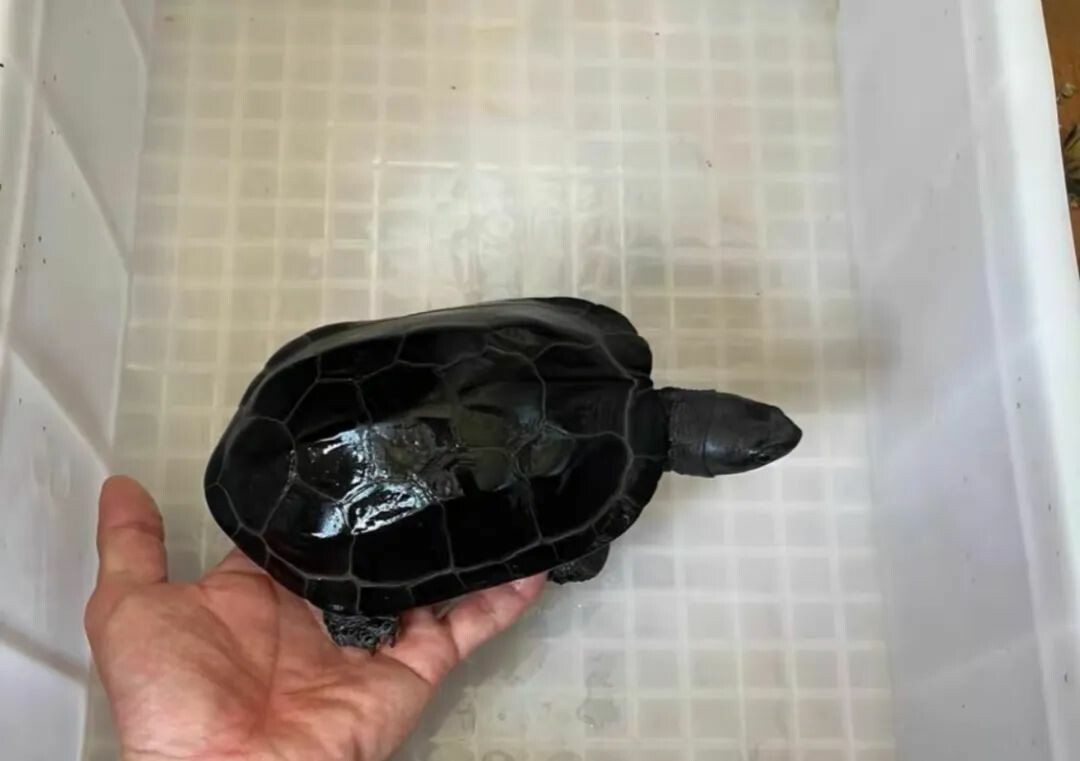
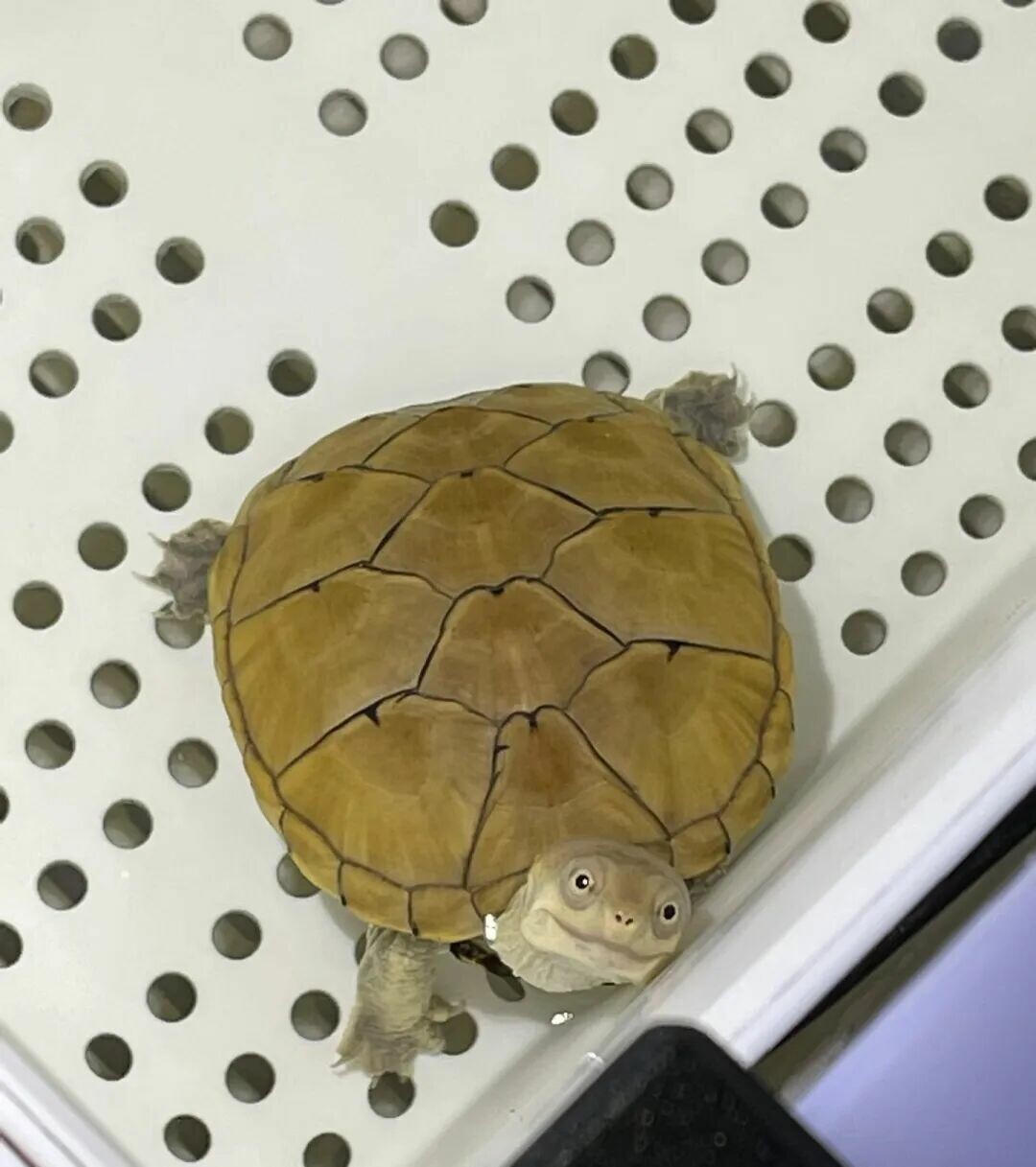
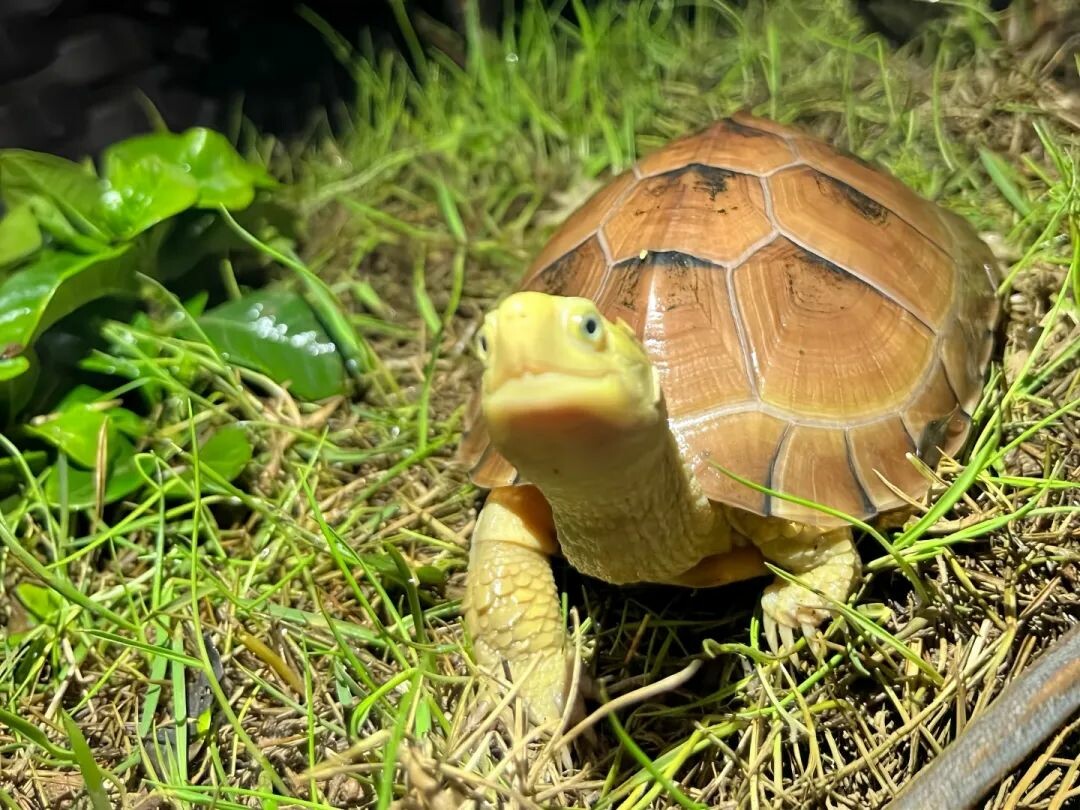
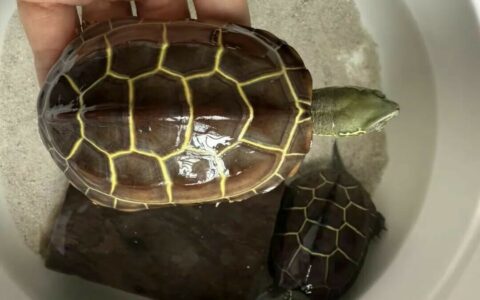
Hello everyone, after all the preliminaries, let’s get straight to the point. Many novice turtle enthusiasts say they can’t keep their turtles alive. Experienced grass turtle breeders follow the natural way, and their turtles thrive no matter how they raise them, which is not suitable for beginners to blindly imitate. This is where my semi-professional turtle breeding skills come into play.
I have a very deep impression of a documentary clip I saw on a science education channel when I was a child. I saw a foreigner casually grab a handful of mud from the riverbed of a wetland, shake it, and a very small turtle was caught between his fingers. He called it a little mud turtle, which I now think should be a hatchling of a member of the Kinosternon genus. So, I associated turtles with mud very early on.
Although it is not rigorous to roughly classify aquatic turtles as stream type and swamp type, because many turtle species can adapt to both environments. One thing is certain, the majority of pet aquatic turtles we see on the market have swamp-like habits. The so-called swamp is not solely referring to the dangerous swamps in adventure stories, but also to shallow water wetlands with slow water flow, surrounded by a large amount of clear water vegetation, and riverbed banks composed of thick mud. The thick layer of mud effectively slows down the process of temperature change, which is an important means for turtles to combat extreme heat and cold, and it is also a natural shelter and temperature control room.
I teach everyone a simple method of raising turtles, the “pure mud water turtle breeding method.” Although this method may seem crude, the survival rate is incredibly high. It can be said that as long as the turtles are not sick when purchased, they can be “guaranteed to live.” Moreover, it is particularly effective in raising difficult hatchlings. In my opinion, grass turtles should be raised from hatchlings. The difficulty of raising juvenile or adult turtles is lower, but their personalities are like a lottery. If you happen to get a timid turtle, it can be very worrying. However, I have never encountered particularly timid grass turtles raised from hatchlings; at the very least, they can accept food.

Now I will teach fellow turtle enthusiasts how to operate specifically. First, get a square container, not too large. I used a desktop storage box that is twenty-five centimeters long and eighteen centimeters wide, and then line it with mud. For a container of this size, I put in five kilograms of mud, which I specifically bought from a lotus pond. Everyone can also dig some wild mud from a clean pond with fish and use it after sunbathing.
Then add water to settle, remove the foam, add new water, and repeat the process once or twice according to the foam situation. The water level does not need to be too deep; it should be enough for the turtle hatchlings to stretch their necks and expose their nostrils above the water surface.
Next, plant some aquatic plants inside, but not too many. Grass turtles have a strong destructive effect on plants, so you can put a small basket to protect them, or lie flat and wait to plant again after the turtles have gnawed them. After planting the plants in the mud, the aquarium is complete. Do not add unnecessary embellishments to the bottom of the tank; although it looks good, the function of the mud will be lost. The mud water tank is about the turtles burrowing in the mud to gain a sense of security and slow down the process of temperature change to combat stress and temperature differences.

In addition, there are three points to note: First, it must face the sun, and the longer the sunlight exposure, the better; second, due to the plants in the turtle tank, it is necessary to do a good job in preventing escape; third, strictly control the number of turtles. For example, in my twenty-centimeter tank, at most two hatchlings can be raised, and it is best to only raise one. There will be absolutely no problem in raising it for two years. If it is a small individual and the local hibernation time is long, it can be raised for four or five years.
By that time, the turtle’s resistance will no longer be as fragile as when it was a hatchling. Changing to other breeding methods can be more relaxed, and you don’t have to worry about losses and adopt a “turtle sea tactic.”
Raising turtle hatchlings in pure mud water can be done outdoors in the large temperature differences of northern Henan, but do not set up a water basking platform. When it gets cold, they can hibernate directly in the original tank. Usually, it only needs to add water when the water is scarce, which is very worry-free. However, it should be moved indoors when the temperature drops below zero. The interactivity will definitely be affected, but it is not as serious as imagined. The strong appetite brought by the developmental instincts of the turtle hatchlings will override all fears, and they can still handle the most basic food reception.
In theory, this method can raise all swamp-habitat turtle hatchlings, including red-eared sliders, eastern painted turtles, European pond turtles, flower turtles, yellow-throated turtles, fruit-nucleated turtles, and helmeted turtles, etc. However, since I have not actually raised multiple individuals with this method, I dare not make a definite conclusion. However, at least it can be affirmed that this method can greatly improve the survival rate of grass turtles and hatchlings.

Novices pay great attention to external things when raising turtles, emphasizing the sense of ritual, beauty, and clarity, and often recommend such methods for novices. The traffic will be high and it will be respected. However, the experienced advice is the premise that supports these methods, not the clear and beautiful appearance itself.
Although my method is clumsy and ugly, it can really raise turtles alive and well without requiring much skill and experience. The turtles have rust on their bodies and the shells have a textured luster, which is not worse than other methods. Of course, I am not promoting pure mud water turtle breeding, nor am I belittling other turtle breeding methods. Everyone’s conditions and preferences are different, and there is no absolutely perfect method of raising turtles. I have previously published an article specifically on the limitations of mud water turtle breeding, which depends on sunlight and affects interaction, etc., so I will not repeat it here.
The following is a supplemental article. Negligence led to the loss of a beloved turtle for a fellow turtle owner. This article will detail the cause of the problem and what to look for when keeping turtles in muddy water: Mud Water Turtle Keeping Precautions: Guide for Temperature Difference Adaptation and Turtle Tank Environment Arrangement
Original article by KPTer, if reproduced, please cite the source: https://www.kaipet.com/en/turtle-hatchlings-dont-survive-pure-mud-water-turtle-breeding-method