

When it comes to the turtle market, the roller coaster-like price fluctuations always leave hobbyists with lingering fears—the price of Black-necked turtle breeders plummeted from 7 million RMB in 2015 to 20 RMB per turtle today, mutant red-eared sliders fell from a peak of 10,000 RMB to become 30 RMB street stall goods, and the Chinese stripe-necked turtle crashed from 750 RMB to 7.5 RMB. Now, the continuously rising prices of mud and musk turtles have many worried: will they repeat the fate of these other species? By combining market patterns with the inherent characteristics of mud and musk turtles, their price trend is not untraceable. On the contrary, it holds a clear deductive logic and strategic opportunities.
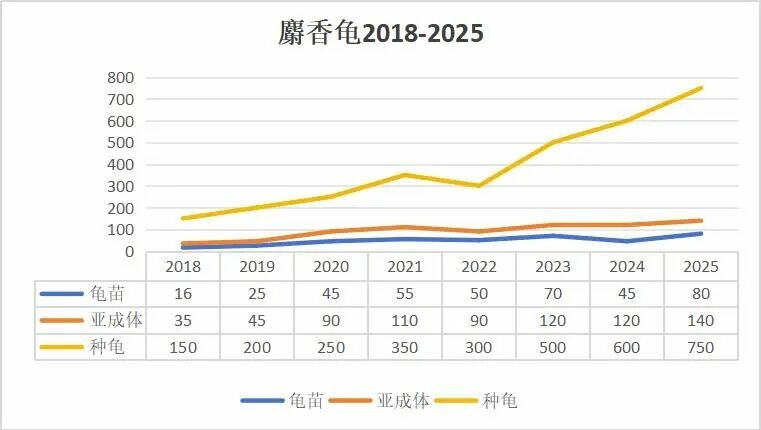
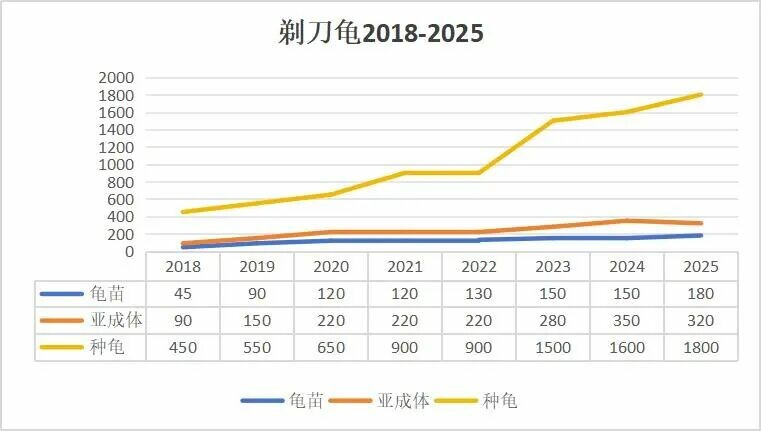
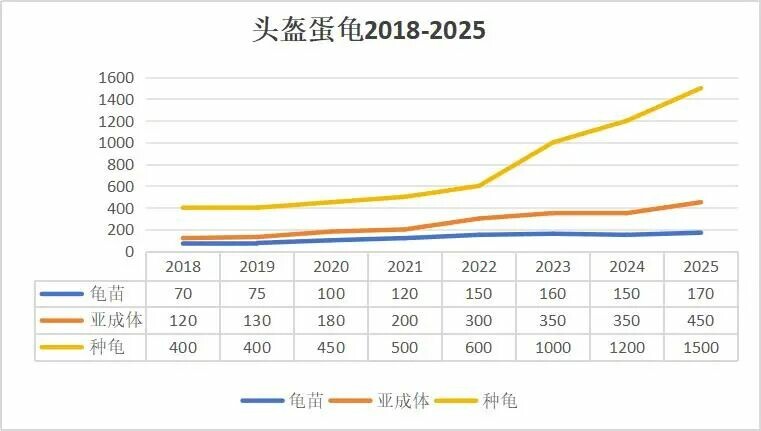
The historical price trend chart shows the prices for male turtles that are perfect specimens of common grade/stock (referring to common, widely available commercial turtles without particularly outstanding features). This chart was created in July, and current prices may differ.
Why Are Mud and Musk Turtles Resistant to Price Drops?
Looking back at the market crashes of species like the Black-necked turtle and the Chinese stripe-necked turtle, the common problems are prominent: frantic production expansion by Guangdong farms leading to overcapacity (e.g., Chinese stripe-necked turtle hatchling numbers once surged a hundredfold), weak market absorption capacity from hobbyists (relying on an immature medicinal market), and a price inversion between home breeding costs and market prices (the Golden coin turtle is a typical example). The price-drop resistance of mud and musk turtles stems precisely from their avoidance of these traps, having built a threefold price firewall:
A solid hobbyist base with much greater market absorption capacity than turtles for medicinal use: Low-end mud and musk turtle species like the Common musk turtle and Razor-backed musk turtle have long cultivated a huge base of loyal users. These hobbyists are driven by “ornamental value + hobby” rather than pure speculation. Even if prices pull back, the large number of individual hobbyists can absorb the market supply, preventing a crash scenario where no one is buying in. This is in stark contrast to the Spotted pond turtle, which relies on a niche medicinal market.
Expectation of a policy safety net, suppressing the risk of explosive production growth: In 2026, mud and musk turtles are expected to be included in conservation management, similar to the Yellow-margined box turtle. This means that large-scale farming will gradually phase out individual breeders, controlling disorderly production expansion from the source. It’s important to remember that the core reason for the crashes of the Chinese stripe-necked turtle and Black-necked turtle was unchecked production expansion. Policy intervention will act as a brake on production capacity for the mud and musk turtle market, preventing a supply-demand imbalance.
A tiered price defense system, providing stronger risk resistance: The mud and musk turtle market has formed a tiered price system, ranging from Common musk turtles at tens of RMB, to Stripe-necked musk and Eastern mud turtles at hundreds of RMB, to the Florida mud turtle at over 10,000 RMB, rather than relying on a single price point. Under this structure, even if a species at one price tier fluctuates, the other tiers can provide support, making it far more robust than the fragile models of the Black-necked turtle and Golden coin turtle, which depended on a single high price.
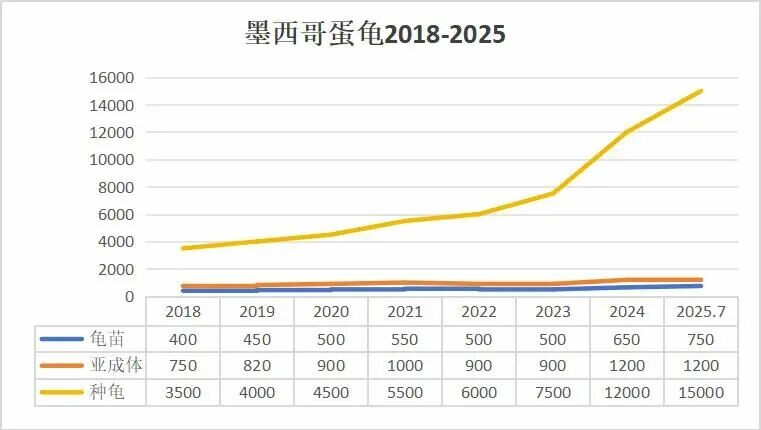
Future Price Trends for Mud and Musk Turtles
Based on the aforementioned market fundamentals, the prices of mud and musk turtles will not blindly skyrocket or plummet. Instead, they will exhibit a trend of long-term rational return, short-term widening divergence, and a clear medium-term window of opportunity.
Long-Term Forecast: A Rational Return for High-End Species
High-end mud and musk turtles like the Florida mud turtle still command a price premium at the 10,000-RMB level, but their price is essentially driven by “scarcity + hype.” As captive breeding techniques mature and policies regulate large-scale farming, their scarcity will gradually diminish. Prices will likely return to a more rational thousand-RMB level—this is not a crash, but a value regression after separating from speculation, similar to the process of the Golden coin turtle’s price deflating from 35,000 RMB to a few hundred RMB in the early years, but the magnitude will be more gradual.
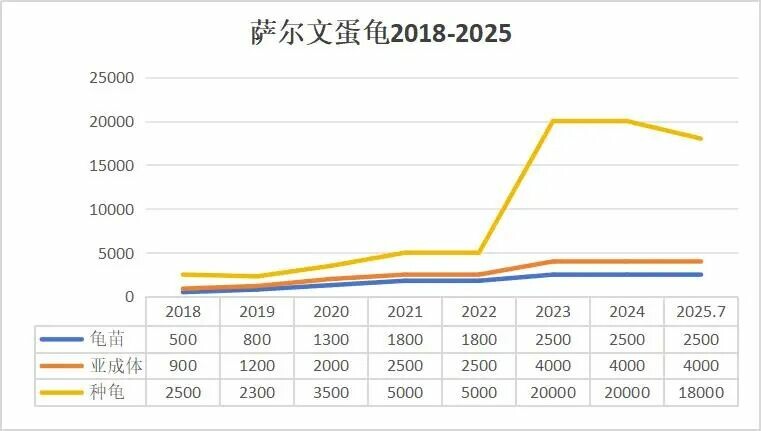
Short-Term Forecast: Divergence Between High-Quality Specimens and Common Stock
In the short term, the overall price of mud and musk turtles will not fall sharply, but the divergence will become more pronounced. The price of ordinary, common-grade turtles will remain stable with a slight decline, while the premium for high-quality specimens will continue to expand. Simply put, in the future, picking a mud and musk turtle based on its appearance will be more important than chasing a specific species. The price difference between a high-quality specimen and common stock of the same species could widen from 1x to 3-5x.
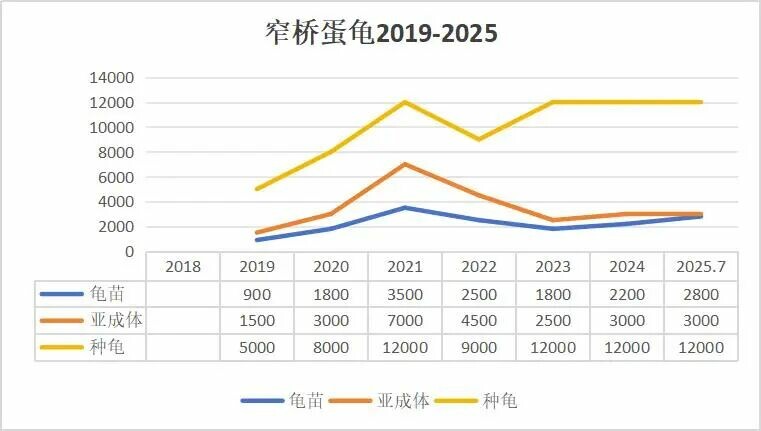
The Key Window of Opportunity: Mid-Range Species
Before the conservation policy is implemented in 2026, mid-range mud and musk turtles like the Stripe-necked musk and Eastern mud turtle will reach their peak cost-effectiveness. On one hand, current production capacity is not yet strictly limited by policy, so prices are still in a relatively reasonable range. On the other hand, after the policy is implemented, individual breeders will be phased out and the costs of large-scale farming will rise. The prices of mid-range species may be adjusted upwards accordingly. For the average hobbyist, acquiring them now avoids the speculative risks of high-end species while benefiting from the price support brought by subsequent policies, making it a “low-risk, high-potential” strategic choice.
Advice for Hobbyists: Focus on Selecting Turtles, Not Speculation
For most turtle enthusiasts, there is no need to be overly anxious about price fluctuations. Instead, the focus should be on “how to choose the right turtle”:
- If you want to balance hobby with potential, prioritize mid-range species like the Stripe-necked musk turtle and Eastern mud turtle, and avoid high-priced, hyped species like the Florida mud turtle.
- When purchasing, focus on aesthetic details such as carapace patterns and head coloration. The value retention capability of a high-quality specimen is far stronger than that of common stock.
- Always make ornamental demand your core motivation, not speculation—the history of the turtle market has long proven that those who make money by speculating on turtles are always in the minority; the ones who can truly hold on for the long term are those driven by a genuine love for the species itself.
The core logic of the mud and musk turtle market is no longer about betting on a crash or a boom, but about rational positioning based on market fundamentals. With the 2026 policy window approaching, do you think mid-range mud and musk turtles will become the high-potential assets as expected?
Original article by 搬运工, if reproduced, please cite the source: https://www.kaipet.com/en/mud-musk-turtle-market-forecast-strategic-positioning-mid-range-species-2026-policy







Comments(2)
Such a clear analysis! I’m leaning towards mid-range species now. Any tips on identifying ‘high-quality specimens’ beyond patterns for a beginner?
@CriticX:Thank you, CriticX! We’re glad you found the analysis helpful. Beyond patterns, for high-quality specimens, look for overall health, alert behavior, smooth shells without imperfections, and a robust build. Consulting experienced breeders can also offer valuable tips!