


In recent years, the topic of the “guide dog controversy” that once sparked heated discussions on Zhihu and Weibo has been raised again. I consulted multiple authoritative sources including Xinhua News Agency and found that China has approximately 17 million people with visual impairment, whereas the number of guide dogs is fewer than 200. Notably, the population of giant pandas in China has now exceeded 1,800 individuals, which is only about one-tenth the number of giant pandas relative to guide dogs, and even a ten-thousandth of the visually impaired population.
Each 100,000 people with visual impairment can be allocated only one guide dog, and the service life of a guide dog is around ten years. Thus, a blind person may need at least four to five guide dogs over a lifetime. According to a 2018 news report, in a first-tier city like Guangzhou there was reportedly only one guide dog available—even though Guangzhou has a guide dog training school. Does this mean we should vigorously train more guide dogs?
The Extremely High Cost of Training Guide Dogs
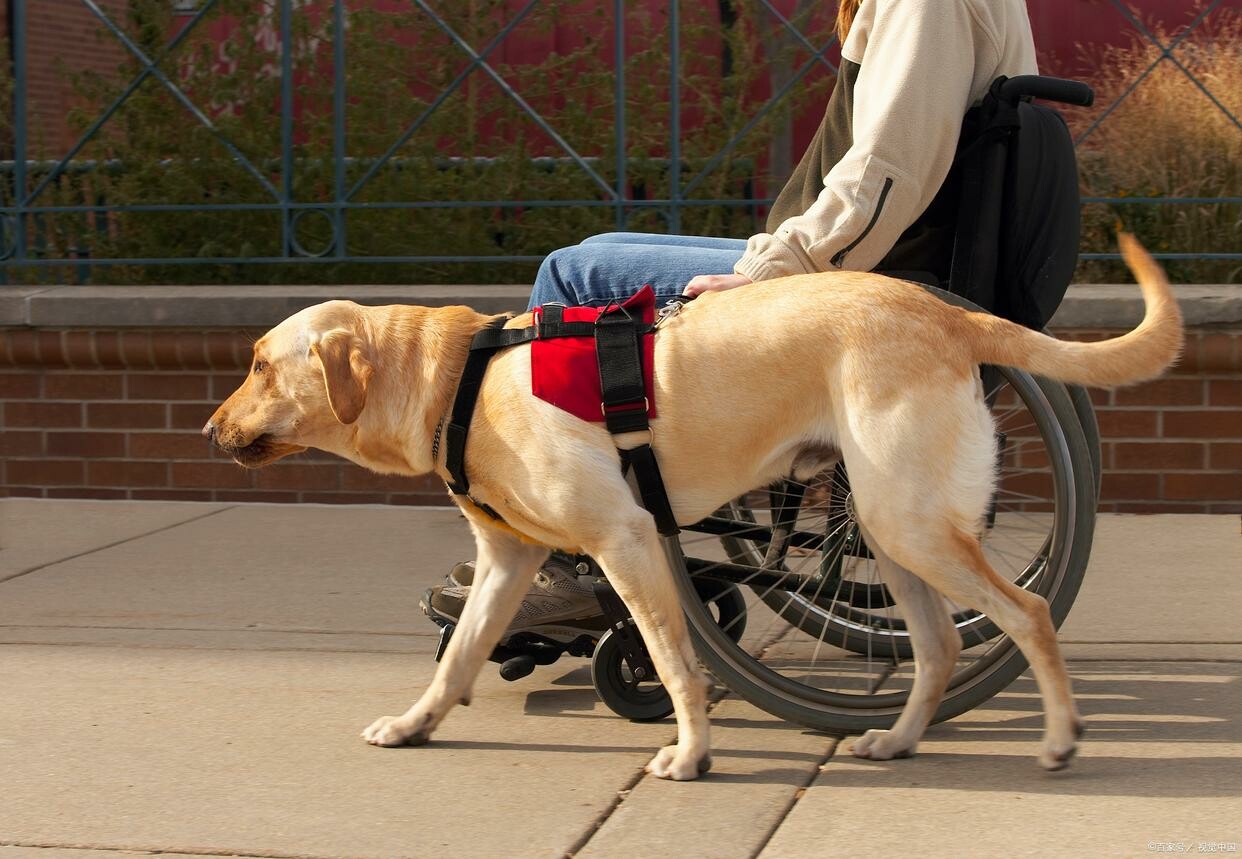
But in fact, our capacity does not permit it. According to information from China Guide Dog Southern Demonstration Base, training one guide dog costs roughly RMB 220,000 (≈USD 30,600 based on mid-June 2025 exchange rate). The base typically raises a batch of 30 dogs, yet only about six ultimately qualify, an attrition rate even higher than that of police dogs. The main expenses in guide dog training lie in staff salaries and dog food. Moreover, such a high elimination rate naturally raises the per-qualified-dog cost.
Limited Funding Sources
Given the high cost of training guide dogs, and that they are provided free to visually impaired adopters, where does the funding come from? Is it all dependent on government subsidies?
According to an Xinhua interview, since 2010, for each successfully trained guide dog, the Dalian guide dog training base has received a subsidy of RMB 60,000 (≈USD 8,350) from the municipal government. However, I do not know whether the subsidy amount remains the same today. Most of the remaining funds rely on charitable donations.
Therefore, if you have ever donated, do you think the money was well spent?
International Comparison Shows a Significant Gap
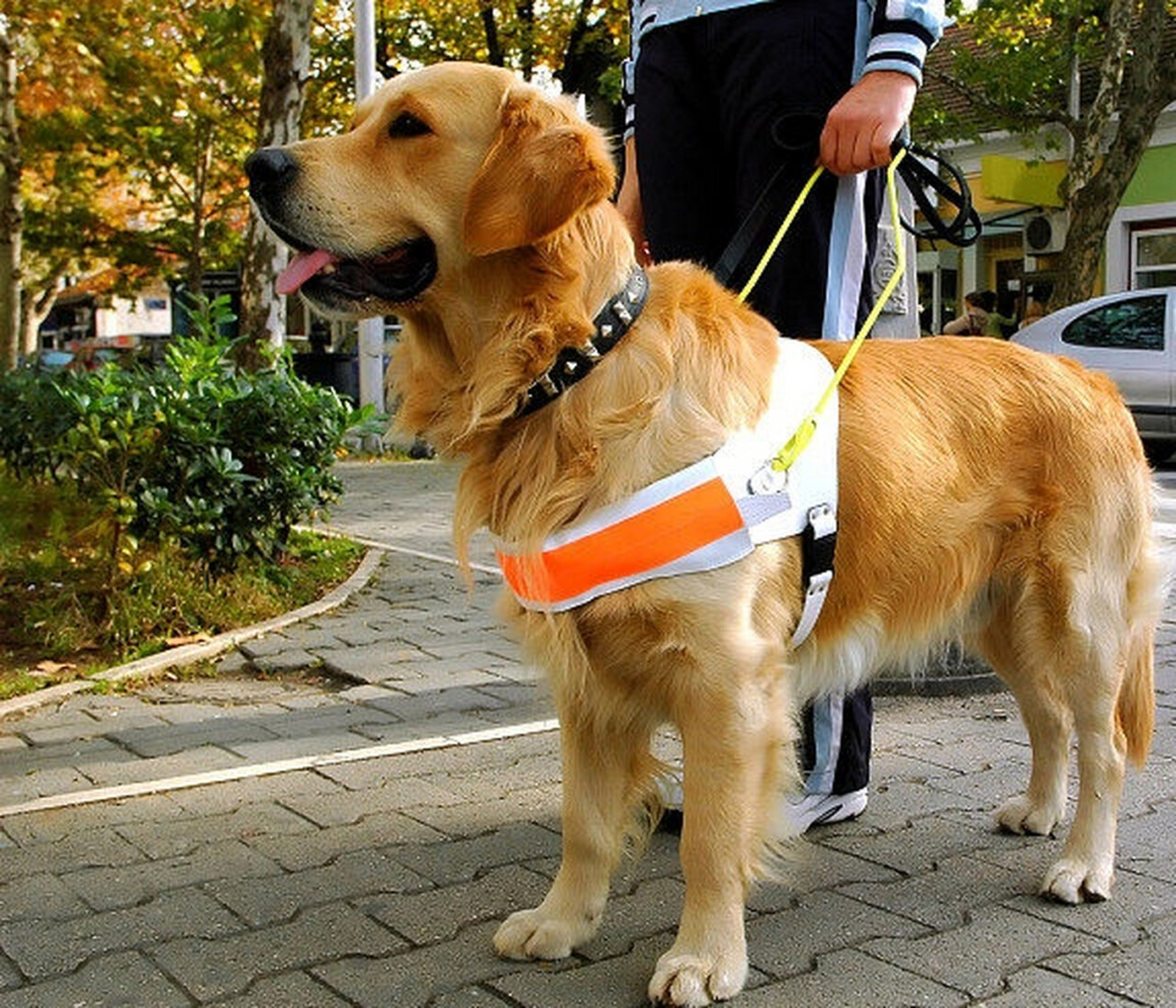
Let us compare with foreign situations. According to statistics from various blind associations and disease control centers, the U.S. has about 3.22 million people with visual impairment and approximately 10,000 guide dogs. Scaled to China’s population of visually impaired, roughly 50,000 guide dogs would be needed to match the U.S. ratio, yet currently China has only about 200—an approximate 250-fold gap. If we wanted to reach the U.S. level, the estimated investment would be on the order of RMB 10–12 billion (50,000 dogs × RMB 220,000 each ≈ RMB 11 billion).
Guide Dog Situations in the UK and France
- UK: approximately 2 million visually impaired, equipped with about 5,000 guide dogs;
- France: approximately 1.7 million visually impaired, with about 1,000 guide dogs.
These figures indeed highlight a pronounced discrepancy between China and other countries in guide dog availability.
Is Training Cost Really Higher?
So do other countries train guide dogs more cheaply?
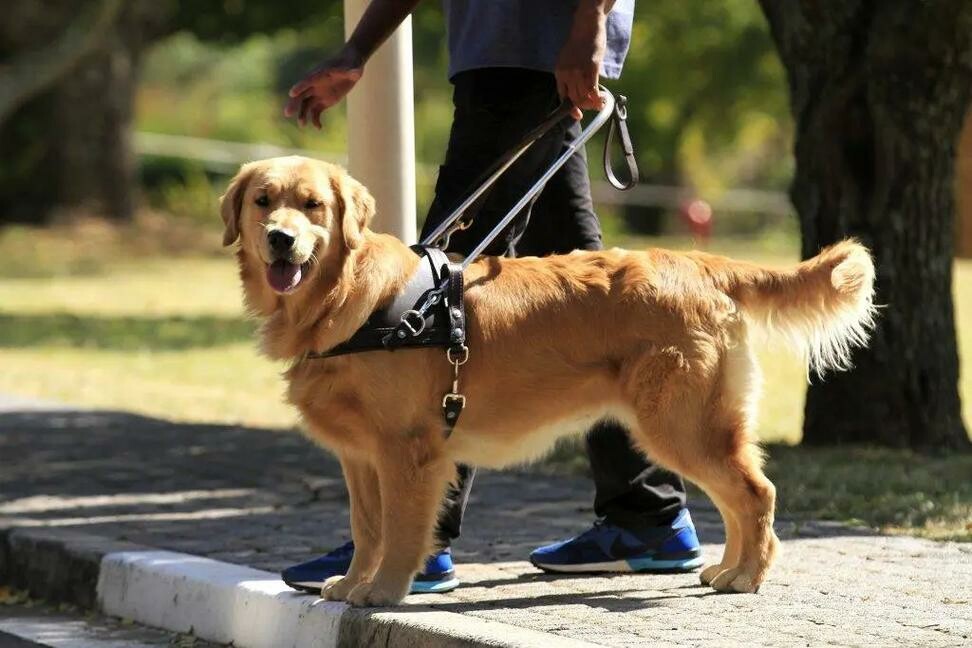
According to the Guide Dogs for the Blind website, training one guide dog costs between USD 20,000 and 30,000 (≈RMB 144,000–215,700 at recent exchange rates), which seems comparable to our costs.
Of course, some may object, saying “Americans earn and spend in dollars, without currency conversion; their cost is ten times cheaper than ours.”
You could think that way, since their staff salaries, when converted to RMB, are indeed much higher. By that reckoning, training guide dogs in the U.S. seems cheaper.

Is the Investment Worthwhile?
Spending RMB 200,000 just to help one person—is this approach meaningful? Today, cars have achieved autonomous driving; why not invest these funds in smart devices like “electronic canes” to assist walking? That might help thousands or even tens of thousands.
Actually, I agree with this viewpoint, but current technology may not yet be mature enough. Another issue is marketization of smart devices: if they become commercial products, people might no longer donate as before. Hence, the assumption of investing solely in smart devices may not hold.
Is Emotional Value Worth the Investment?
I saw online rebuttals saying that guide dogs primarily provide emotional companionship; can cold, impersonal electronic devices replace that?
To be honest, emotional companionship is indeed important, but the problem now is that out of 100,000 people with visual impairment, only one can obtain such companionship—what about the other 99,999?
Isn’t this a modern version of “why not eat meat porridge when starving”?
In times of famine, when everyone is nearly starving, you talk about eating chicken, duck, fish, vegetables and fruits, and balanced nutrition. If one insists on such extreme viewpoints, then there’s no need to train guide dogs.
Moreover, guide dogs returning home still require care for diet and daily living—why not use the money to hire a “high-end caregiver” instead? This could provide both companionship and life care, plus create a job opportunity—would that not be a win–win?
For this severe supply-demand imbalance, do you think resources should be allocated to maximize coverage for more visually impaired people, or should we adopt the mindset of “helping at least one person” by concentrating resources on a few?
Original article by KPTer, if reproduced, please cite the source: https://www.kaipet.com/en/guide-dog-controversy-debate-collision-resource-constraints-emotional







Comments(2)
This is a tough problem. I’m curious: what practical, scalable solutions could genuinely help more visually impaired people, beyond just guide dogs?
@CriticX:CriticX您好,您提出的问题恰恰是文章的核心。寻找导盲犬之外能普惠更多视障人士的实用、可扩展方案,是社会各界亟待解决的挑战。感谢您的深入思考。