If an animal possesses the following 3 characteristics simultaneously, then it is not suitable to be a pet: First, poor management of excretion issues; Second, poor interactivity; Third, tasty to eat. Rabbits occupy all 3.
Firstly, rabbit meat is simply delicious. Sichuan alone consumes 300 million rabbits a year. As the saying goes, “Bunnies are so cute, they must be red-braised.”

Poor Interactivity: Eye Structure and IQ Limitations
Secondly, rabbits have poor interactivity, and their eyes look dull. Cats’eyes are located at the front of their faces, so when humans look at them, it feels like locking eyes—similar to the “four eyes meeting” in the stand-off between Xiahou Dun and Yang Jian—making it relatively easier to perceive their emotional changes. Needless to say, dogs are even better; the area around their eyes has even evolved two more muscles than their wolf ancestors: the levator anguli oculi medialis and the retractor anguli oculi lateralis, enabling them to make many expressions similar to humans.
However, rabbits are prey animals in nature. Their eyes grow on the sides of their heads, and there are no independently controllable muscles around the eyes, so it is very difficult for you to see joy, anger, sorrow, or happiness in their eyes, resulting in much less emotional interaction.
In addition, rabbits do not have high enough IQs. A cat’s brain has 250 million neurons, and a dog’s brain has 500 million neurons, while a rabbit’s brain has only 70 million neurons. We often say cats are stupid because the defect of cats lies in having too many built-in shortcut pathways in their nervous system, which easily triggers their “underlying code”and is prone to “bugs.”That is why we see many behaviors in cats that are simply like “Louis XVI raising his hand”—leaving people completely scratching their heads (headless). But compared to rabbits, they are much better.
If the IQ is too low, they cannot really understand human commands. Raising them doesn’t feel like a relationship between an owner and a pet, but rather like the husbandry relationship between humans and poultry like chickens, ducks, and geese: once the feed stops, the feelings drop to zero. Therefore, it is basically difficult for rabbits to provide emotional value; they can only provide nutritional value. Of course, we are talking about the general situation for the majority here, and we do not rule out some exceptionally gifted players whose interactivity is actually very good.
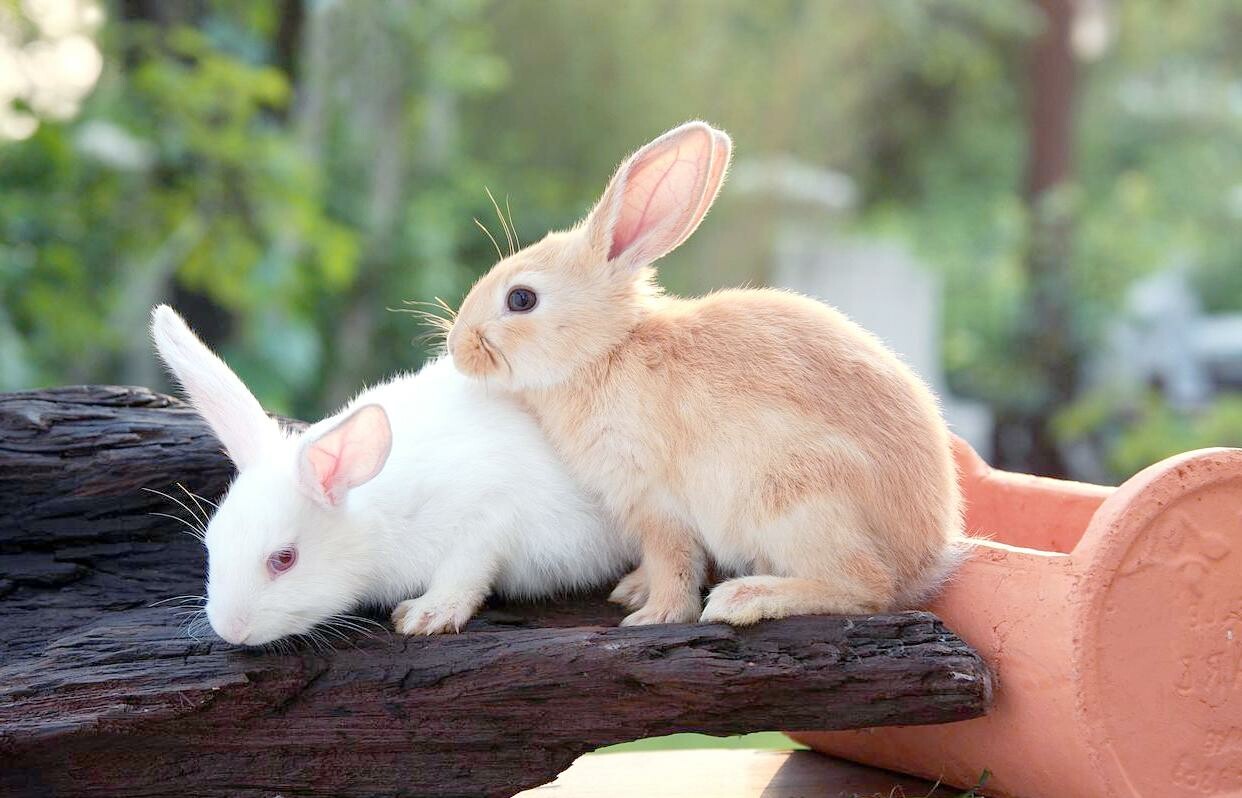
Troubles Brought by Excretion and Physiological Structure
Next is the issue of feces disposal. Anyone who has raised a cat knows that although cats look very stupid when their underlying code kicks in, the fact that they can handle their own excrement alone allows them to instantly beat 80% of other pets. If you raise a bird as a pet, you will understand the saying: “Constipation is the rectum’s reluctance to let go, while diarrhea is the poop’s freedom.”
Rabbits belong to the category that cannot handle their own excrement well. Rabbits have a very strong sense of territory and will use cecotropes and urine to mark their territory. Cecotropes are a type of feces that is very sticky and contains pheromones. This is very annoying; no one wants to come home from work and see poop and urine all over the floor, right?
There is also an interesting fact about rabbit cecotropes, which is that mother rabbits will feed their own cecotropes to their young. Because cecotropes are rich in gut flora, they can help young rabbits digest grass better. This is the literal embodiment of being “raised on a diet of shit and piss.”
Of course, some rabbits can be toilet trained well, but the training cost is much higher than that for talented players like cats and dogs. Moreover, due to the physiological structure of their intestines, rabbits cannot hold their poop, so even if they can defecate in a designated spot, some “black pearls” will still be exposed outside.
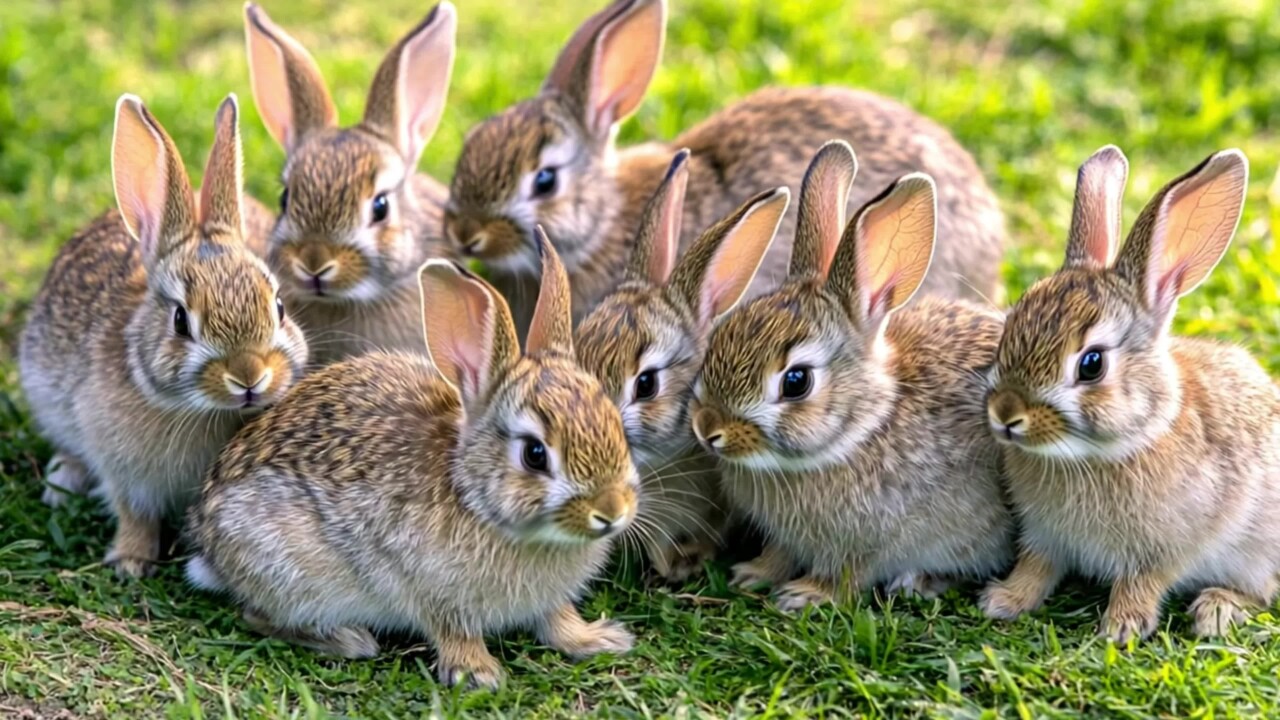
Fatal Timidity and Amazing Reproductive Ability
Then there is a very fatal point about rabbits, which is that their courage is too small. If the sound is slightly loud, they will be scared into running around in stress, highlighting a state of “Wu Zetian ascending the throne”—completely irrational. They can even be scared to death by the sound of firecrackers.
Finally, there is another point: rabbits are simply too fertile. If you raise a pair, you must neuter them.
How strong is a rabbit’s reproductive ability? Individuals can reach sexual maturity in 3-6 months after birth. The pregnancy period for female rabbits is short, only 28-31 days, and the hormone levels in the female rabbit will change rapidly after giving birth to the young, allowing her to conceive again within hours of delivery. Female rabbits also have two uteruses, which can conceive independently without interfering with each other. This allows a female rabbit to produce 6-8 litters a year, with 4-12 kits per litter; their reproductive skill points are truly maxed out.
So here comes the problem: Assume a female rabbit produces 6 litters a year, with 6 kits per litter, 3 males and 3 females. These 3 female rabbits will also start reproducing after 6 months. Ask: how many rabbits will there be in total after two and a half years?
Original article by KPTer, if reproduced, please cite the source: https://www.kaipet.com/en/rabbits-surpass-cats-3-major-reasons-revealing-status-gap-pet-world