

Many turtle enthusiasts may have heard the saying that it is not recommended for turtle hatchlings to hibernate. This view is mainly based on the following reasons:
Weak Constitution and Limited Tolerance
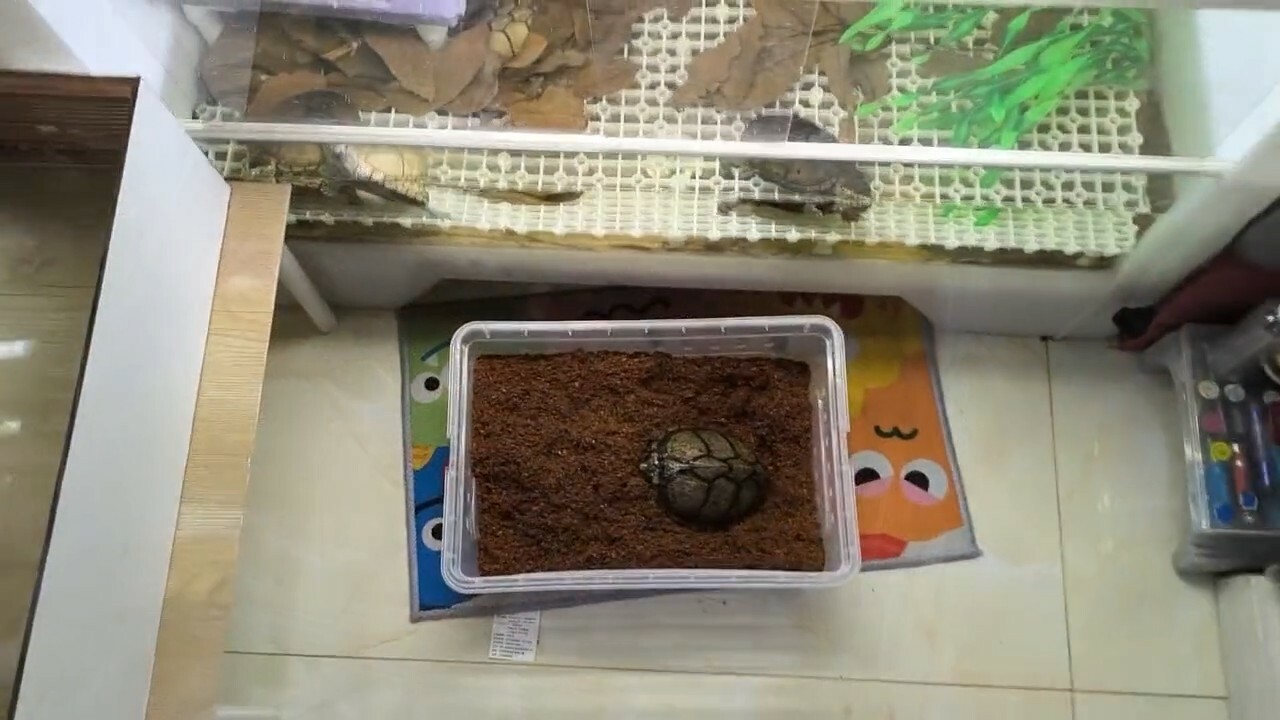
First, the constitution of turtle hatchlings is relatively weak. Compared to adult turtles, hatchlings have smaller bodies and poorer physiques, with limited tolerance for low temperatures. If a hatchling is forced to hibernate, it may lead to mortality, as their stability is far inferior to that of adult turtles.
Short Growth Period
Secondly, the hatching time for turtle hatchlings is usually concentrated around August each year. In northern regions, the water temperature at the end of October may have already dropped below 20 degrees Celsius, requiring a cessation of feeding. This means that the growth time for newly hatched turtles is very limited, especially for late-season hatchlings (the last batch of hatchlings in the turtle breeding season), which may face cooling temperatures just a few weeks after birth, leaving them simply insufficient time to accumulate energy. Furthermore, the hibernation period in northern regions lasts up to 6 months, which is a major challenge for hatchlings.
Differences in Considerations Between Hobbyists and Farmers
Furthermore, it is a matter of probability. Some turtle enthusiasts may see videos of farmers letting hatchlings overwinter in outdoor ponds (referring to outdoor natural or artificial ponds) and blindly follow suit. However, the situations of farmers and hobbyists are vastly different. Farmers possess a large number of hatchlings; in order to save costs and screen for robust hatchlings, they choose natural overwintering. Hobbyists, on the other hand, have a limited number of turtles, and each one is bought with “hard-earned money,” so they naturally pay more attention to the survival rate. Veteran hobbyists know that the survival rate of hatchlings overwintering often depends on luck and probability, and they will not easily take risks.
Beware of Misleading Advice
As for those groups suggesting that enthusiasts force hatchlings or even weak seedlings to overwinter, they mainly fall into two categories: merchants and hobbyists who only keep cheap turtles. Merchants hope for mortality after hatchling hibernation so customers will purchase again; whereas these hobbyists treat life lightly because their turtles are cheap. Turtle enthusiasts should distinguish carefully to avoid being misled by them. For expensive turtles that are also first-year hatchlings, heating is naturally safer. Moreover, you must understand the basic habits of the breed you are keeping. Tropical turtles, regardless of price, are intolerant of low temperatures.
Hibernation Strategies Under North-South Climate Differences
Of course, this does not mean that all turtle hatchlings must be heated to survive the winter. The climate difference between the north and south of China is indeed significant, leading not only to different lengths of hibernation but also to different durations for feeding, and the temperature gap in winter is vast. Therefore, regarding the above situations, turtle enthusiasts in the north effectively need to consider whether to hibernate based on the actual feeding situation. In the south, however, the feeding period is inherently long; even late-season hatchlings will have time to grow. Coupled with a winter that is not too cold and an early arrival of spring, it is not necessarily impossible for turtles to overwinter naturally. In all matters regarding turtle keeping, we must analyze according to the time and location; it is not a “black and white” relationship.
Original article by 搬运工, if reproduced, please cite the source: https://www.kaipet.com/en/turtle-hatchlings-heating-winter-depth-analysis-hibernation-mortality-risks-baby-turtles







Comments(1)
This is super helpful! For southern regions, what specific environmental cues indicate natural overwintering could be viable for hatchlings?