

Have you ever wondered if your slow-moving turtle companion actually enjoys being petted? When it stretches its neck and narrows its eyes, is it expressing comfort or merely enduring your touch? In fact, turtles do have their preferred ways of being stroked, and understanding them can help you build a deeper bond with your reptilian friend—and avoid unintentionally causing harm.

The Neck: A Turtle’s “Pleasure Switch”
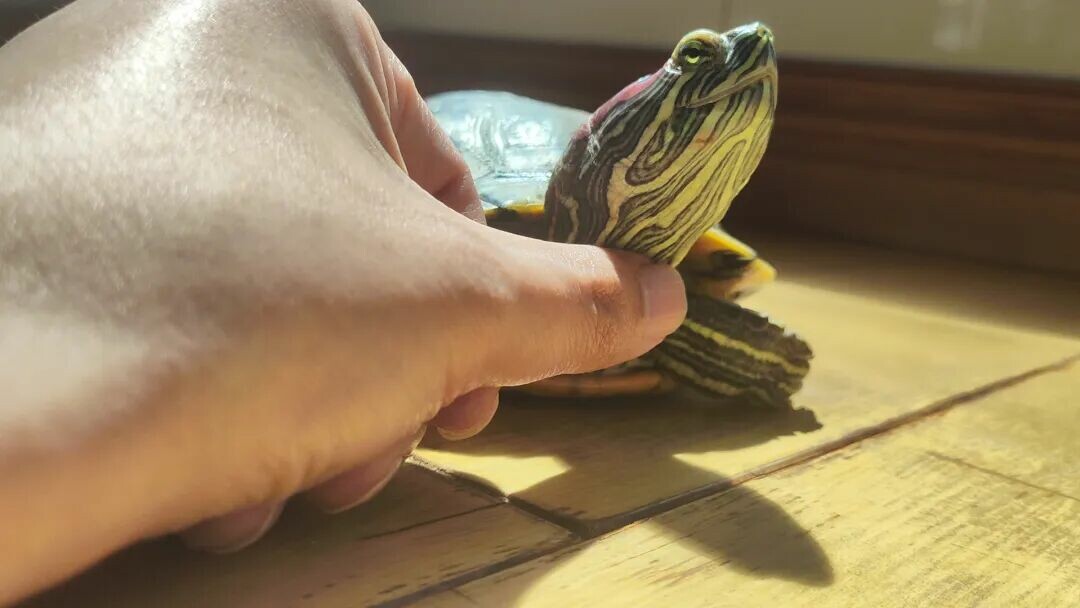
A turtle’s neck is perhaps its most surprising sensitive zone. This seemingly ordinary part of its body is actually filled with dense nerve endings. When gently stroked with a fingertip, a turtle can feel a pleasurable sensation similar to being tickled.
How to Properly Pet a Turtle’s Neck
Use the pads of your fingers, not your nails, and stroke up and down with extremely light pressure.
Focus on the sides and underside of the neck.
Observe the turtle’s reaction: If it extends its neck rather than retracting it, that means it’s enjoying the sensation.
Each petting session should be brief, about 1-2 minutes is sufficient.
It’s worth noting that not all turtles will immediately enjoy having their necks touched. Some individuals need time to build trust before they will expose this vulnerable area to their owner.
The Shell: More Than Just Protection
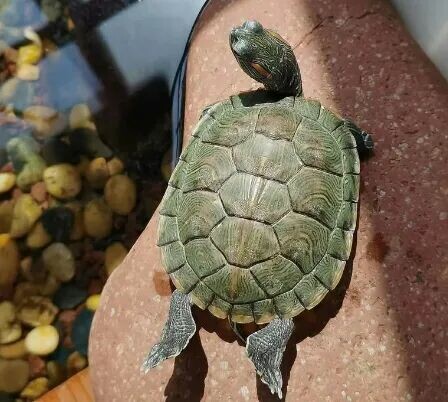
The turtle shell is often mistaken for insensate “armor,” but this is not the case. The shell’s surface has nerve distributions that can perceive pressure and touch. Proper stroking can make a turtle feel relaxed and secure, similar to a back massage for humans.
A Guide to Petting the Shell
Use your palm instead of your fingertips to distribute the pressure evenly.
Use circular motions or stroke back and forth.
The pressure should be gentle; avoid any pressing actions, as the shell is sensitive to compression.
Be especially careful not to tap on the shell, as this could cause internal injuries.
Interestingly, different turtles have varying preferences for shell-petting. Some enjoy being stroked on the top of the shell, while others prefer a light touch along the margin. Owners need to be patient and experiment to find what their own turtle likes best.

The Head: The Ultimate Test of Trust
The head is one of a turtle’s most vulnerable areas, making them extremely cautious about it being touched. A wild turtle’s instinct will cause it to immediately retract its head when it feels threatened. Only when a turtle completely trusts its owner will it possibly accept a light touch on its head.
Steps to Successfully Touch a Turtle’s Head
Allow the turtle to get used to your presence first; avoid reaching out suddenly.
Approach slowly from the front, within the turtle’s line of sight, so it can see your movements.
For the first few attempts, simply hold your hand near its head without making direct contact.
The initial contact should be extremely brief, then gradually increase the duration over time.
If the turtle accepts being petted on the head, you might notice it closing its eyes or remaining still—these are signs of relaxation and enjoyment.

Off-Limits Zones: Limbs and Tail
A turtle’s limbs and tail are extremely sensitive, and most turtles strongly dislike being touched in these areas. These parts are connected to important reflex nerves, and a touch is often interpreted as a threat, causing the turtle to immediately retreat into its shell.
Reasons to Avoid Touching These Areas
It triggers their defense mechanism, increasing the turtle’s stress levels.
It can potentially damage their delicate skin and scales.
It can undermine the trust you have built with your turtle.
If you accidentally touch these areas and the turtle retracts into its shell, you should give it space and let it decide when to emerge again.

Reading Your Turtle’s Body Language
The key to successful interaction with your turtle is understanding its body language. Signs of pleasure include: stretching its neck, relaxed limbs, slow blinking, and actively moving closer to your hand. Signs of discomfort include: quickly retracting body parts, making a hissing sound (as air is rapidly expelled), or attempting to walk away or hide.
Every turtle has a unique personality; some are naturally affectionate towards humans, while others are more reserved. Respecting their boundaries is fundamental to building a lasting relationship of trust.
By correctly petting the areas your turtle enjoys and avoiding its sensitive zones, you can not only bring it pleasure but also deepen the special bond between you. The next time you approach your turtle companion, remember these tips and see if it responds to your affection with a more relaxed posture. Of course, don’t be in a rush—interaction is something that is nurtured over time.
Original article by KPTer, if reproduced, please cite the source: https://www.kaipet.com/en/petting-turtle-unveiling-3-sweet-spots-areas-absolutely-avoid








Comments(2)
文章太有用了!学到了好多,我家小龟好像只喜欢摸脖子,大家家的小龟有什么特别的喜好吗?
@CriticX:很高兴您觉得这篇文章有帮助!小龟的行为可能和它的性格、对主人的信任度以及对抚摸的偏好有关。有些小龟确实更喜欢被摸下巴或颈部,而有些可能对其他部位更敏感。您可以多观察您家小龟的反应,找到它最享受的互动方式。