

Learn about a turtle a day. Today, we introduce a species with a peculiar, even bizarre appearance: the Mata Mata turtle.
Overview of the Mata Mata Turtle
Appearance and Features
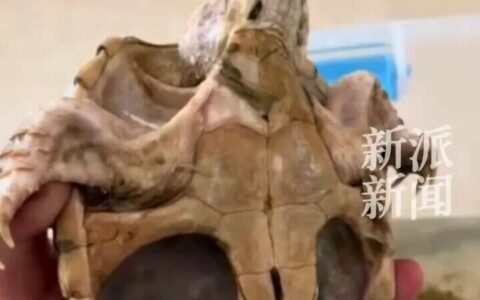
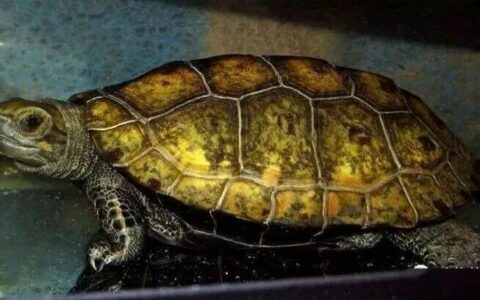
First, as is customary, let’s introduce the appearance of the Mata Mata turtle. Unlike other common turtle species, the Mata Mata has a unique appearance, “resembling a withered leaf.” Its carapace is rough and nodular, with 3 prominent ridges (keels) extending from the front to the back of the shell, which is rectangular or oval in shape. As juveniles, their carapace and neck are tea-brown to reddish-brown, and the plastron is usually a vibrant orange-red. As they mature, the color of the plastron fades to yellow or brown, and the neck eventually turns brownish-tan or tea-brown.
The head and neck are large and flat, covered with countless small tubercles, nodules, and folds. The neck is wide and flattened, adorned with flaps of skin. The eyes are small, set on the sides of a large, flat, triangular head, and the nose is long and tubular, “like a snorkel.”
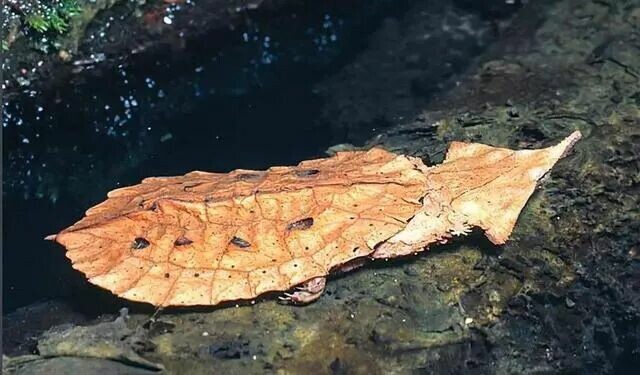
Seeing an appearance like this, don’t you also find the Mata Mata turtle a bit peculiar? Friends who like unique things might even find it “super cool.” But hold on a moment. An adult Mata Mata turtle can reach a length of 31-45 cm, with a maximum length of up to 61 cm. Does that immediately put off your desire to buy one?
Of course, some friends might mention the Common Snapping Turtle and the Alligator Snapping Turtle, which are already kept by many hobbyists in the pet turtle community. They also grow to a large adult size and are more aggressive. So why can’t the Mata Mata turtle be as accepted as the snapping turtle species?
The Challenges of Keeping a Mata Mata Turtle
This brings us to the Mata Mata turtle’s “high-maintenance care journey.”It’s not that there are no Mata Mata keepers in the pet turtle community, but some of its unique characteristics are destined to prevent it from becoming as popular a pet turtle as its similarly-sized counterparts, the snapping turtles.
Strictly Carnivorous Diet
While keepers are still struggling to choose which brand of turtle pellets to use, the Mata Mata turtle has already told you that it “doesn’t eat turtle pellets.” Unlike most omnivorous pet turtles in the hobby, the Mata Mata is a strict carnivore, primarily feeding on live fish, shrimp, non-toxic frogs, aquatic insects, etc. Even as hatchlings, they feed on small insects, earthworms, and even fish fry. Not only does this greatly increase feeding costs, but the leftover meat scraps not promptly removed from the turtle tank will accelerate water quality deterioration and emit a fishy and foul odor.
Constant Water Temperature
Unlike mainstream pet turtles that are kept in cold water and overwinter in cold water, the Mata Mata is also “a noble turtle that can’t stand the cold.” The suitable water temperature is 28-30°C. In winter, a constant-temperature heating rod must be used to maintain the water temperature and prevent fluctuations from affecting its appetite and health. The Mata Mata turtle does not hibernate, and low temperatures can lead to metabolic disorders, which is another point of trouble for keepers.
Prefers Shade and Dislikes Light
The Mata Mata turtle is a nocturnal animal that prefers dark environments. This means the turtle tank can only be placed indoors and cannot be exposed to strong light. With all these “buffs (added challenges) stacked up”: must be indoors, must eat meat, requires frequent water changes, and cannot have strong light, it’s basically like “being a parent to it,”and you can’t even “enjoy its beauty properly.” This directly deters a large number of hobbyists from keeping the uniquely-shaped Mata Mata turtle.
Original article by 搬运工, if reproduced, please cite the source: https://www.kaipet.com/en/mata-mata-turtle-bizarre-appearance-difficult-unveiling-3-major-deal-breakers

Comments(2)
Their bizarre appearance is captivating! I’m curious, for those who successfully keep them, what’s the most rewarding aspect of their unique personality?
@CriticX:We agree, their bizarre appearance is truly captivating! It’s an excellent question about the rewarding aspects of keeping Mata Matas. We invite our experienced keepers to share their insights on what makes these unique turtles special.