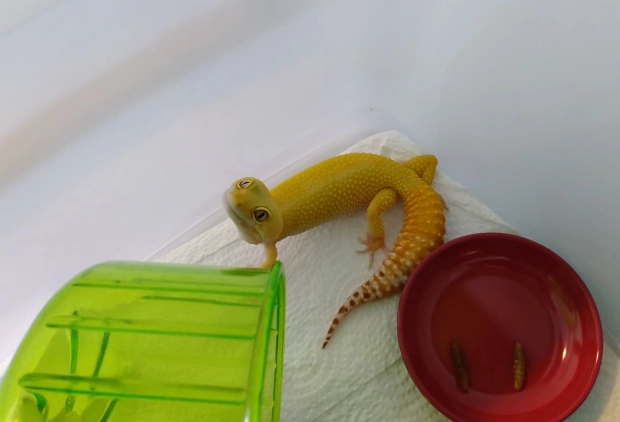
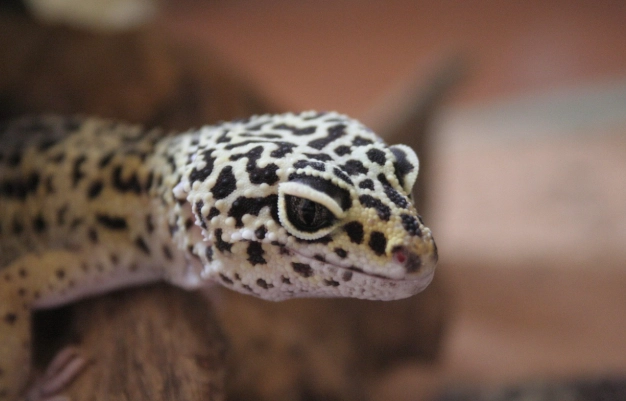
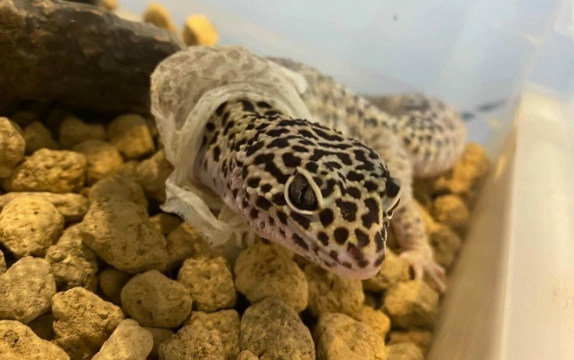
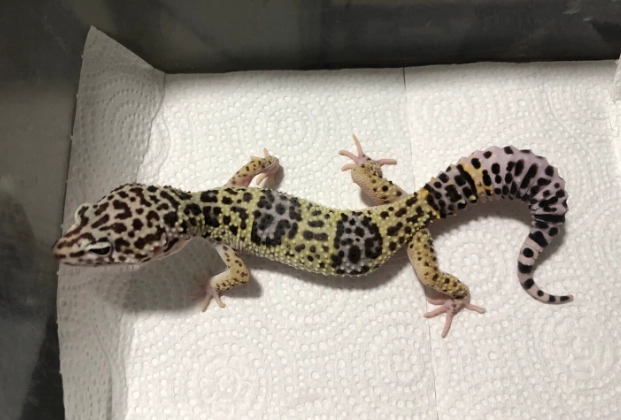
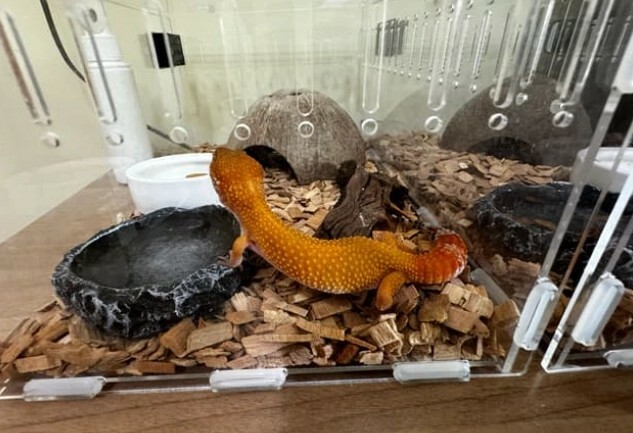
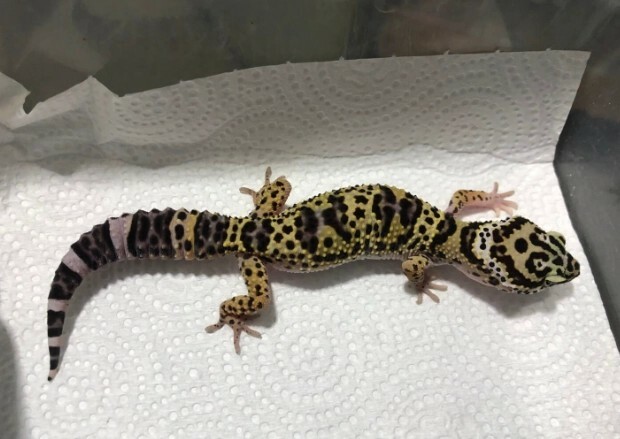
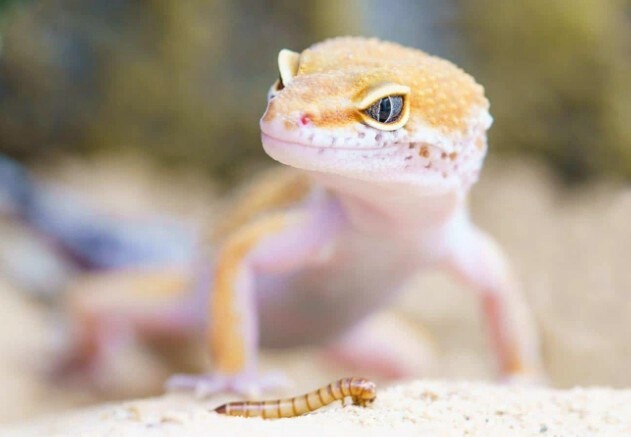
Just brought home a cute gecko, and the first question that usually pops up is: Is it male or female? This question isn’t just about what name you give it; it directly affects your future care planning. Keeping 2 male geckos together might lead to bloody fights, and if you plan on breeding, a male and female pair is obviously a must. There is a lot of information on the internet, but some methods are actually inaccurate for juveniles, while others require a certain level of experience to judge. I have kept geckos for over 10 years and have seen countless newbies get stuck at this stage. This article is here to clarify the key points of identifying males and females once and for all.
Why is Distinguishing Gecko Sex So Important?
This isn’t just to satisfy curiosity; it is a real husbandry management issue.
First is the risk of cohabitation. For most gecko species, especially Leopard Geckos, males have strong territorial instincts. If you put 2 adult male Leopard Geckos in the same enclosure, there is a 90% chance they will fight, resulting in lost tails at best, or death at worst. Although females are relatively peaceful, competition can still arise if space or resources are insufficient. Clarifying the gender from the start can effectively avoid such tragedies.
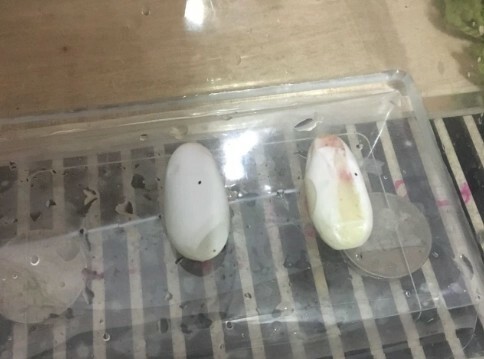
Second is breeding plans. If you want to try breeding, you naturally need 1 male and 1 female. But did you know? Even without mating, female geckos can lay infertile eggs (similar to hens laying eggs) if nutrition is sufficient and the environment is suitable. If you don’t anticipate this, seeing an egg suddenly pop up in the enclosure might give you a scare. By determining the sex in advance, you can be mentally prepared.
Finally, there are subtle differences in health observation. Experienced keepers will find that males and females differ slightly in metabolism, growth rate, and susceptibility to certain health issues. While not absolute, knowing the gender helps you provide more detailed care.
Note: It is best to wait until the gecko reaches a certain weight or age (e.g., Leopard Geckos weighing about 15-20 grams or being 4-6 months old) to determine sex. The characteristics of juveniles are very indistinct, and judging too early can easily lead to mistakes.
5 Key Features for Sexing Geckos (Ultimate List)
Forget those ambiguous theories. Here are the 5 most reliable observation points verified by time. Please check them in order and judge comprehensively for the highest accuracy.
Cloacal Opening and Femoral Pores
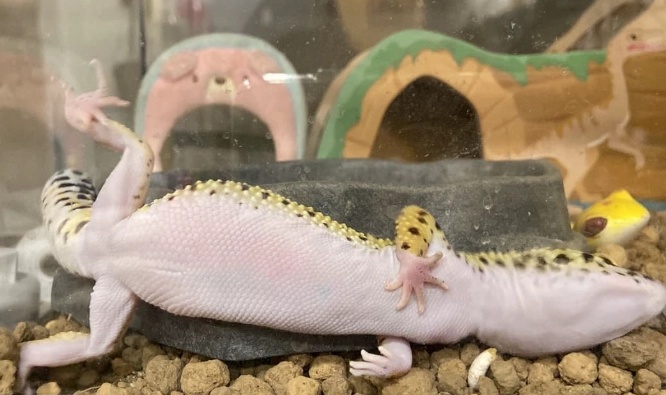
This is the most important and professional basis for judgment. Gently flip the gecko over and observe the ventral side where the tail base connects to the body.
Male Gecko: You will see a distinct V-shaped arrangement. At the top is the cloaca (the common cavity for excretion, reproduction, and urination in reptiles, birds, and amphibians) opening. Below the opening, on both sides, there is a row of clear, raised small dots; these are the femoral pores (glandular openings on the inner thigh or femoral region of reptiles). Femoral pores secrete a waxy substance used to mark territory. Further down, in the middle of the ends of the two rows of femoral pores, you can usually feel or see two semi-circular bulges, which is the location of the hemipenal bulges (bulges on both sides of the cloaca storing the hemipenes in male reptiles). The whole structure looks very “layered.”
Female Gecko: Relatively simple. There is only the cloacal opening, below which are smooth scales. There are no rows of raised femoral pores, and no hemipenal bulges can be felt. The whole area looks relatively “flat.”
When I first started keeping them, I always felt the femoral pores were hard to see clearly. Later I discovered that using side lighting to illuminate and observe the shadows of those small dots makes them easier to identify than staring directly at them, especially with darker-colored individuals.
Shape and Width of the Tail Base
Observe the part where the tail connects to the body from the side or above.
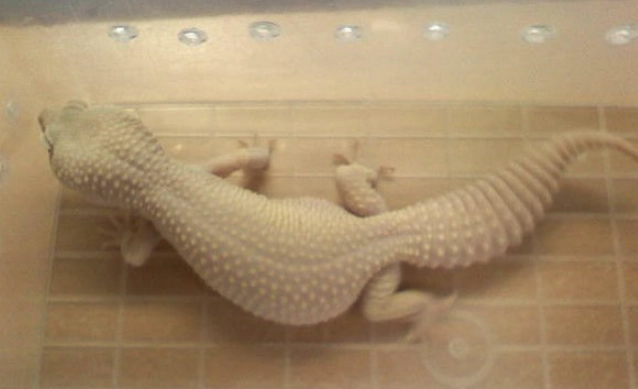
Male Gecko: The base of the tail is usually thicker and wider because it hides the hemipenes and related muscle tissue inside. From above, the base of a male gecko’s tail looks like it has a slight “bulge”or “swollen feeling,” and then gradually tapers off.
Female Gecko: The base of the tail is relatively slender, and the transition line from body to tail is smoother and more fluid, without obvious bulges.
This method is particularly useful for adults, especially when you cannot successfully view the ventral side; it can serve as a quick reference. However, for very fat females or very thin males, looking at this alone might be inaccurate.
Overall Head and Body Structure
This is a more holistic observation point that requires some experience, but it is very valuable for certain species (such as Leopard Geckos).
Male Gecko: The head is usually wider and triangular, with a thicker neck, giving an overall impression of being “burly” and more muscular. This provides an advantage during adult fights.
Female Gecko: The head is relatively delicate and oval-shaped, and the body lines are rounder and softer. Of course, you can’t just look at the head; you have to combine it with body proportions.
I must remind you that this feature is greatly influenced by individual differences and nutritional status. An overfed female gecko might look stronger than a skinny male gecko, so this can only be used as a supplementary clue.
Behavioral Differences (Auxiliary Reference)
Behavior cannot be used as a 100% standard for judgment, but it can offer strong hints.
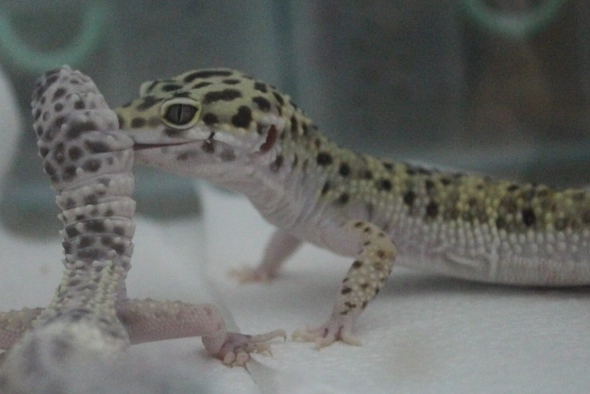
Male Gecko: More likely to exhibit “marking behavior,” such as rubbing their chin against the environment and frequently patrolling inside the enclosure. During the breeding season, they may perform a rapid tail-shaking courtship action towards moving objects (including your hand). Aggression is usually stronger.
Female Gecko: Behavior is generally more “calm,” and they stay in hides more often. Of course, this isn’t absolute; every gecko has a unique personality. I once kept a female Leopard Gecko whose ferocity was no less than that of a male.
Special Features of Specific Varieties
Taking the most common Leopard Gecko as an example, there is a saying circulating among herp keepers that is not entirely accurate: look at the “calcium sacs” (endolymphatic sacs, sac-like structures in the neck of reptiles that store calcium) on the side of the neck. After a female Leopard Gecko reaches sexual maturity, a pair of dark purple patches (actually calcium deposits for future eggshells) will appear under the skin on both sides of the neck, behind the ears, which can be seen through the skin. Males usually do not have them or they are extremely indistinct.
But the problem is, many male Leopard Geckos also have faint calcium sacs! Especially some High Yellow or Albino morphs. So this can only be treated as a clue that “strongly suggests it’s a female,”but you cannot conversely say “no calcium sacs means it must be a male.” This is one of the places where newbies most easily misjudge.
Male vs Female Features Quick Reference Table
I’ve organized the key points above into a table for your convenient comparison.
| Feature | Male Gecko | Female Gecko |
|---|---|---|
| Cloaca & Femoral Pores | Distinct V-shaped arrangement of raised femoral pores below the cloaca; hemipenal bulges can be felt. | Only cloacal opening; scales below are smooth; no femoral pores or hemipenal bulges. |
| Tail Base | Relatively thick, swollen; contour has bulges. | Relatively slender; lines are smooth. |
| Head & Body Type | Large head, thick neck; burly physique. | Head is more delicate; lines are rounded. |
| Behavioral Tendency | More active; may show marking or tail-shaking courtship behavior. | More calm; aggression is usually lower. |
| Leopard Gecko Calcium Sacs | Usually absent or extremely faint. | Dark purple patches often visible on the side of the neck. |
3 Common Judgment Mistakes Newbies Make
Knowing the methods, you also need to know how to avoid the “pitfalls.”
Concluding based only on calcium sacs.
As mentioned earlier, many male Leopard Geckos also have spots, so using this as the sole standard will lead to outrageous mistakes. You must use femoral pores and the cloacal structure as the primary basis.
Judging when the gecko is too small or too thin.
The sexual characteristics of juveniles haven’t developed at all; femoral pores are invisible, and the tail is thin, so they look like females no matter how you look at them. Wait until at least the subadult (an animal individual that is not fully mature but has passed the juvenile stage) stage to make a judgment.
Over-interpreting behavior.
A particularly lively and active gecko isn’t necessarily male, and a shy one isn’t necessarily female. Personality differences are too great. I once had a female gecko that rushed for food faster than anyone else; her behavior was completely unlike a “typical” female gecko.
Expert Advice: When you are unsure, the safest method is to take photos for record. Take clear photos of the ventral side and side profile, upload them to relevant reptile communities, and ask experienced keepers for help in identification. Listening to the opinions of several veterans can greatly improve the accuracy rate.
Gecko Gender FAQ
Q: My Leopard Gecko weighs only 10 grams; can I determine if it’s male or female?
Not recommended. At this weight, Leopard Gecko sexual characteristics are usually indistinct, and the error rate for judgment is extremely high. Most individuals need to grow to over 15-20 grams (about 4-6 months old) for the differences in femoral pores and the tail base to become clearly distinguishable. Waiting patiently is the best strategy; rushing to judge will only get you an unreliable answer.
Q: Is there a way to know the sex of gecko eggs before hatching?
Currently, there is no reliable non-invasive method to determine the sex of gecko eggs before hatching. The sex determination mechanisms of reptiles are complex; some are determined by temperature (TSD, Temperature-dependent Sex Determination), while others are determined by genes (GSD, Genetic Sex Determination). Although Leopard Geckos are influenced by incubation temperature regarding sex tendency, we cannot tell the gender of the individual inside the egg from its appearance. Anecdotal methods like looking at egg shape, size, or spots have no scientific basis. The mystery of gender will only be revealed after the little gecko hatches and grows up.
Q: I bought a pair of geckos “guaranteed 1 male and 1 female,” but after keeping them for 6 months, I found both have femoral pores. Did the seller scam me?
This situation isn’t necessarily a scam; it’s more likely a “misjudgment.” As mentioned before, judging juveniles is very difficult, and even experienced breeders can make mistakes. If both have obvious femoral pores, it is highly probable that they are 2 males. I suggest you separate them into different enclosures immediately to avoid fighting. You can contact the original seller to communicate the situation and show clear photos as evidence. This also reminds us that when purchasing, if possible, it is best to choose subadults or adults whose characteristics are already obvious.
Q: What practical impact does distinguishing male and female have on gecko health care?
There are several subtle but important impacts. If a female gecko reaches sexual maturity, she may periodically lay infertile eggs even if kept alone, a process that consumes a large amount of calcium and energy. When keeping female geckos, you need to pay more attention to calcium powder and Vitamin D3 supplementation, and watch for signs of “egg binding” (dystocia), such as a persistently swollen abdomen, lethargy, and refusal to eat. Male geckos relatively don’t have this problem, but obese male geckos sometimes have excessive fat accumulation in the tail, affecting the retraction of the hemipenes, which may cause infection, so attention needs to be paid to weight control.
Q: If I really can’t tell, do veterinary clinics provide professional identification?
Yes. If you have tried all methods and still cannot be sure, you can take the gecko to an animal hospital specializing in reptiles. Veterinarians can confirm it through more professional examinations (such as ultrasound). However, for individuals with obvious features, experienced veterinarians can usually judge through physical palpation and visual inspection, which costs less and is non-invasive. This is the ultimate solution, suitable for those cases where characteristics are indeed very blurry and confusing.
I hope this guide helps you solve the gender mystery of your gecko at home. Remember, combining multiple features, judging at the right time, and seeking a second opinion when necessary is the only way to get the correct answer. Enjoy the time spent with your unique reptile pet!
Original article by 搬运工, if reproduced, please cite the source: https://www.kaipet.com/en/gecko-sexing-illustrated-5-core-features-avoid-newbie-mistakes