

Although previous articles have briefly mentioned the choice of weaning foods, many people still choose the wrong weaning foods. Therefore, I have decided to give everyone another detailed popular science explanation on the selection of weaning foods.
Seed Mix
If you plan to let the little bird have a seed mix as its staple food in the future, then choose soaked millet as the weaning food.
Soaked millet refers to millet soaked in boiling water; once the water cools down, simply pour the water out. Soaked millet is not the same as dry millet or cooked millet, nor can you use hot water below 100℃ (212°F) to soak the millet. The soaked millet feels like dry millet to the touch; it is "rock hard." However, if you pinch it gently with a fingernail, dry millet will "not budge," whereas soaked millet will be pinched into powder. If you are still worried that soaked millet is hard to digest, you can repeat the boiling water soaking process 1 to 3 times.
When feeding, you can put the soaked millet into the prepared hand-feeding formula to feed together, or add warm water to feed with the soaked millet.
When using soaked millet as weaning food, for the staple food placed aside, initially only put out soaked millet. If the little bird can eat it by itself, you can then mix dry millet or a mixed seed diet into the soaked millet.

Pellets
If you plan to let the little bird have pellets as its staple food in the future, then choose big-name pellets as the weaning food.
Big-name pellets refer to relatively well-known foreign "brands" such as Harrison’s, Roudybush, Hagen, Vetafarm, etc., rather than domestic "brands," rarely known "brands," or bird dealer homemade foods with no "brand."
Recommending well-known foreign "brands" is not "worshipping foreign things." Rather, current domestic formulas and production technologies (and insufficient regulation of pet food) are indeed inferior to those abroad. Choosing domestic "brands" more easily leads to nutritional imbalance / malnutrition, crop stasis (food stagnating in the digestive tract, leading to indigestion) / indigestion, and the palatability (the degree to which food is accepted and digested by pets) is also not that good.
Pellets are generally very hard, but they soften easily when they meet water. They do not need to be soaked like soaked millet; they can be added directly to the hand-feeding formula, or soaked in warm water for a few tens of seconds before feeding. If soaked for a few minutes, the pellets will completely dissolve in the water, turning into "mush."
When using pellets as weaning food, for the staple food placed aside, choose soaked pellets plus dry pellets. If the little bird can eat by itself, you can switch to dry pellets plus a small amount of seed mix.
Weaning Method
When weaning, you need to place the weaning food around the little bird all day long, and hand-feed 1 to 2 meals of formula plus weaning food every day. At first, only put a small amount of weaning food in the formula, then as the little bird gradually adapts to the weaning food, gradually reduce the proportion of formula and increase the proportion of weaning food. Finally, when it becomes all weaning food and no formula, you can stop hand-feeding and let the little bird eat on its own.
This is a gradual process. You cannot directly stop feeding formula and only feed weaning food as soon as the weaning period arrives, or not feed weaning food and just leave it nearby for the bird to eat voluntarily. Weaning like this is too rushed; since the little bird has not yet learned to eat weaning food, it is very easy to cause the little bird to starve to death.
During the weaning period, it is necessary to let the little bird come into contact with as many foods as possible. Contact does not equal feeding; foods used for contact (unhulled seeds, fruits, vegetables, etc.) are placed aside, not used for feeding! Do not mix foods used for contact into the weaning food or formula for forced feeding; a slight carelessness will lead to crop stasis in the little bird. If the little bird eats voluntarily, there is no need to stop it. Little birds in the early stages of weaning will usually just nibble at unrecognized foods, swallowing very little.
Wrong Weaning Foods
There are some foods that are unsuitable, whether used directly as weaning food or as food for contact during the weaning period.
Eggs / Egg Millet
Eggs are protein, while parrots mainly eat a vegetarian diet (primarily plant-based foods). Their bodies have a weak ability to decompose and digest protein. Ingesting too much protein is prone to causing indigestion, crop inflammation (inflammation occurring in the crop, a part of the avian esophagus), and crop stasis. Even if it is all digested, digesting large amounts of protein will increase the burden on the liver and kidneys. Long-term overload work is prone to causing liver and kidney damage, causing hepatitis and nephritis. Even if they do not suffer from liver or kidney inflammation, since laying hens may be treated with hormones during rearing (the process of raising animals to maturity), resulting in hormones in the eggs as well, parrots may experience hormonal disorders, endocrine imbalance, etc. after consumption, which is very hard to regulate back. Egg millet, as the name suggests, is made of eggs plus millet, so it also contains eggs and should not be consumed in excess.
Dry Millet / Improperly Soaked Millet
The first section already explained that soaked millet is the weaning food, while dry millet is not easy to digest. Jumping directly from formula to dry millet during weaning is prone to causing indigestion. Also, many novices do not know how to soak millet.
Wrong ways to soak millet include: soaking dry millet together with formula (60 to 40℃ / 140 to 104°F hot water); soaking with hot water less than 100℃ (212°F); soaking with 100℃ hot water but cooling to 40℃ before feeding; cooking into millet porridge.
Cooked Millet Porridge
Soaked millet feels very hard when squeezed, but turns to powder when pinched with a fingernail; soaked millet is easier to digest than dry millet. However, if it is cooked millet, firstly, high temperatures will cause nutrient loss. Secondly, cooked millet will gelatinize, meaning the millet swells and softens, becoming soft and glutinous, and the water used to cook the millet will also become "sticky and gooey." Gelatinized millet is all starch, hard to digest, and prone to causing crop stasis.
Various Health Supplements
When weaning, because birds may tire of formula but cannot yet eat hard food, it leads to decreased appetite and weight loss. Many owners will worry about the little bird being malnourished, so they will add a large amount of health supplements to the bird: vitamins, probiotics, water-soluble calcium, digestive enzymes…… and even cuttlebone powder and egg yolk powder.
Actually, losing weight during the weaning period is very normal. Generally, they will lose about 2 grams (0.07 oz) per day. As long as it does not drop below the warning line (generally 5 to 10 grams / 0.18 to 0.35 oz lighter than the lowest standard weight), there is no need to be too anxious; "concern leads to chaos." Arbitrarily supplementing with health products can easily harm the little bird through overfeeding.
Regarding knowledge points on health supplements, everyone can refer to the previous article "Types and Usage Dosage of Health Supplements"; you can view it by privately messaging the keyword "Health Supplements" in the backend.
Miscellaneous Stuff
I have also explained before that the weaning period is the "golden period" for parrots to recognize food. The more foods they come into contact with at this time, the lower the chance of picky eating in the future. Consequently, many people mistake "contact" for "feeding," but in reality:
- Contact = Place it aside for it to see; if it wants to eat, it eats; if it doesn’t, it doesn’t matter.
- Feeding = Feeding it to eat; regardless of whether it wants to eat or not, you must feed it.
So many people will ask me, "What if the little bird (referring to the weaning period) can’t eat green vegetables?", "What if the little bird refuses to eat cuttlebone?", "What if the little bird learning to eat seed mix doesn’t know how to crack the shells?"…… Actually, at times like this, just leave it there. You don’t need to require the little bird to know how to eat it from the start; they need a process of exploration. If they can’t do it now, they will later.
Feeding vs. Contact
The weaning period is also the period for the little bird to recognize food, so besides feeding the little bird weaning food, you also need to place some food aside to let the little bird recognize food.
The weaning food used for feeding includes parrot hand-feeding formula, soaked millet, and soaked pellets. The proportions of these three need to be adjusted according to the bird’s degree of adaptation.
For the food placed aside, it is best to use 2 dishes. One for the weaning food used for feeding (soaked millet, soaked pellets), used for learning to eat by itself.
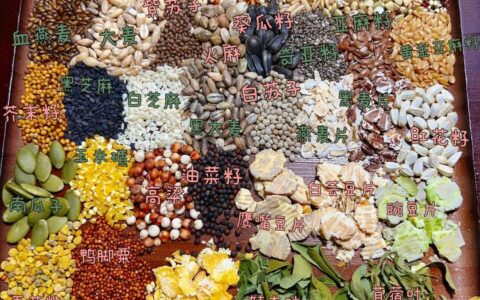
One for contact food, which is the food the little bird can choose to eat after completely weaning. At this time, it is just to let the little bird recognize the food; no forced feeding is required, let the little bird decide whether to eat or not. Foods used for contact include dry millet, mixed seed diet with shells, shell-free seed diet, pellets, various fruits and vegetables, etc. (Note: This does not include egg millet or cooked eggs).
The above is the relevant content regarding parrot weaning food. I hope it can help the little birds that need weaning and bird owners. I wish everyone’s birdies healthy growth! Peace and happiness!
Original article by 搬运工, if reproduced, please cite the source: https://www.kaipet.com/en/feed-parrots-weaning-detailed-explanation-2-weaning-foods-guide-avoiding-pitfalls


Comments(1)
Thanks for explaining soaked millet! Does its initial hardness benefit jaw development, or is it mainly for digestive ease?