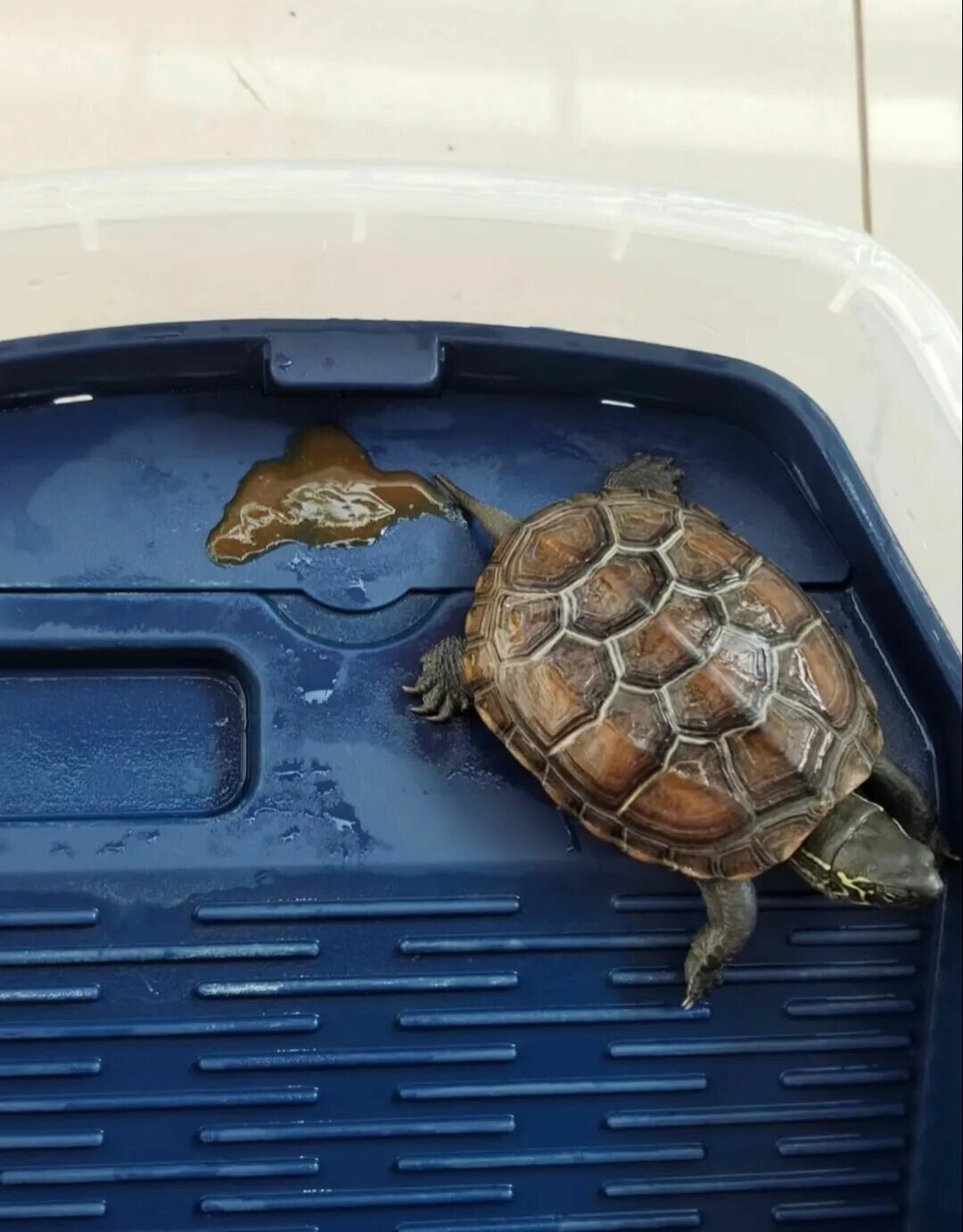
The core issue in changing water for turtles is not how often to do it, but whether the turtle needs it. It’s similar to how we change our mobile phones; it’s not that you have to change them after a year of use, but whether there are any issues with your phone that affect its use. If it’s working well, there’s no need to change it.
The same applies to changing water for turtles; it’s not a must to do it every three days. We first need to understand what kind of water is suitable for turtles to live in. We must learn to judge whether there are significant problems with your water body that could affect the health of the turtles, rather than rigidly adhering to a principle that dictates a specific number of days for water change. There’s no need to solidify our thinking; everything should be flexibly adjusted according to the actual breeding conditions.

Judging the Deterioration of Water Quality
A core basis for determining whether to change the water for turtles is to see if the water quality has deteriorated. The most obvious sign of deterioration is when the water body emits a foul odor, and in such cases, it is imperative to change the water immediately. Additionally, there are many external factors involved in the issue of water change, such as the size of the water body, breeding density, feeding amount, and whether there is filtration, etc., all of which are important parts that affect when you should change the water.
Let’s take manual water change as an example. Water has self-purification capabilities, and in some cases where the water body is large and the number of turtles is small, the water quality may not deteriorate badly even if the water is not changed for a week or even half a month, and the turtles can still live well.
Size of the Water Body and Water Change Frequency
Many friends have reported that their turtle tanks become unbearable to smell if not changed every other day. This situation usually occurs because your water body is too small, and the turtles eat and excrete a lot, and the destructive power of turtle feces and food residues exceeds the self-purification capability of the water, causing it to smell quickly.
To illustrate with a simple and understandable example, if you have a bowel movement in a footbath, the water is definitely no longer usable. However, if you have a bowel movement in a pond, it does not significantly affect the water quality of the pond. The same behavior, due to the difference in the size of the water body, has a completely different effect. Keeping turtles follows the same principle.
In summary, not changing the water for a long time will lead to a foul smell, so change it promptly. If your water smells particularly quickly, consider increasing the size of the water body. We also do not recommend changing the water for turtles too frequently in daily life. If you find this helpful, please feel free to like, follow, and share.
Original article by KPTer, if reproduced, please cite the source: https://www.kaipet.com/en/change-water-turtles-factors-affecting-water-change-frequency