

Rickets is a metabolic disorder in puppies caused by insufficient vitamin D and calcium. It primarily manifests as impaired ossification during growth, leading to bowing of long bones under load, cartilage hyperplasia, and “rosary bead” swelling at the costochondral junction of ribs. Clinically, it is characterized by digestive disturbances, pica, lameness, and deformities of the limbs and vertebrae.

Etiology
The principal cause of rickets is inadequate or deficient vitamin D. Puppies obtain vitamin D from feed and maternal milk, and can also synthesize it when sunlight converts provitamin D₂ in the skin to vitamin D₃. Factors leading to deficiency include poor maternal nutrition, vitamin D–deficient milk or post‑weaning feed, insufficient sunlight exposure, and malabsorption from digestive disorders. Vitamin D deficiency impairs calcium absorption and bone mineral deposition, precipitating rickets.
Deficiency or severe imbalance of calcium and phosphorus, parathyroid dysfunction, uremia, or genetic defects also contribute significantly. Heavy infestation with intestinal parasites can further impede absorption of calcium, vitamins, and proteins, triggering the disease.

Clinical Signs
Early signs include pica—such as eating soil, clay, or debris—and delayed teething. Joint pain leads to a stiff gait, lameness, and difficulty rising, especially in the hind limbs, where puppies may adopt a “kneeling”, O‑shaped, or X‑shaped posture. Skeletal deformities become apparent: swelling of the epiphyses at the knees, wrists, and ankles yields a “double joint” appearance. Costochondral junctions show rosary bead–like swellings; there may be sternal depression, spinal curvature (physiologic lordosis, kyphosis, or scoliosis), and pelvic narrowing.
Deformation of the axial and appendicular skeleton produces a dwarfed skeleton. Maxillary swelling narrows the oral cavity, causing nasal congestion sounds and respiratory distress; jaw pain impedes chewing. Digestive disturbances and pica lead to anorexia, inactivity, and progressive weight loss, eventually resulting in cachexia.

Diagnosis
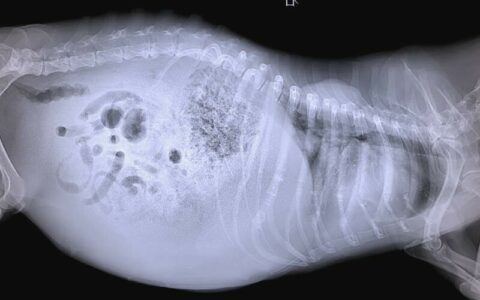
A presumptive diagnosis is made based on the puppy’s age, insidious onset, skeletal deformities, and radiographic evidence of decreased bone density. Confirmation is strengthened by measuring serum calcium and phosphorus levels; values below 9 mg/dL (calcium) and 2.5 mg/dL (phosphorus) are diagnostic of rickets.
Treatment
Enhanced Husbandry
Maintain clean, well‑lit housing, encourage moderate exercise, and ensure adequate sunlight exposure. Adjust the diet to guarantee sufficient intake of vitamin D and minerals.
Supplement with vitamin D preparations, such as cod liver oil 5–10 ml once daily. Discontinue if diarrhea develops.
Vitamin D supplements can also be mixed into feed or administered via intramuscular injection. Monitor closely to avoid overdose, which may cause poor calcium absorption, weight loss, digestive disturbances, organ atrophy, and circulatory problems.
Calcium Supplementation
Add calcium supplements to the feed at 1.5–2 g once daily for 1–2 months. If digestive disturbances occur, consider administering a gastric tonic.
Original article by KPTer, if reproduced, please cite the source: https://www.kaipet.com/en/analysis-canine-rickets-puppies-vitamin-deficiency-nutritional-imbalance



Comments(2)
Great insights into rickets! I’m curious, what’s considered ‘adequate sunlight exposure’ for puppies? Are there any risks to too much sun?
@CriticX:Thank you, CriticX, for your insightful question! While our article underscores the importance of sunlight, it doesn’t specify exact durations for puppies or risks of overexposure. For personalized guidance on your puppy’s specific needs, we strongly recommend consulting a veterinarian.