

When you see your little turtle motionless in a corner, do you ever worry, “Is it sleeping, or……?” Don’t panic! Turtles are the “Sleep Masters”of the animal kingdom, and there’s a lot to learn about their slumber. Today, let’s unlock 4 fun facts about turtle sleep that will help you fully decode its sleep signals.
A Turtle’s Routine and Sleep Duration
Just like humans, turtles follow a circadian rhythm and primarily sleep at night. A healthy adult turtle needs about 8-10 hours of sleep per day, making them true “wellness gurus.” However, they might also take short naps during the day to catch up on rest. So, if you see your beloved turtle with its eyes closed for most of the day, there’s no need to worry excessively—it might just be sleeping like a baby.
Turtle Sleeping Positions and Emotional Expression
Turtles have a wide variety of sleeping positions, each revealing its emotional state:
- Classic “Prone” / “Shell-retracted” Position: This is the most common posture, indicating that the turtle is in a normal state of rest with a moderate level of alertness.
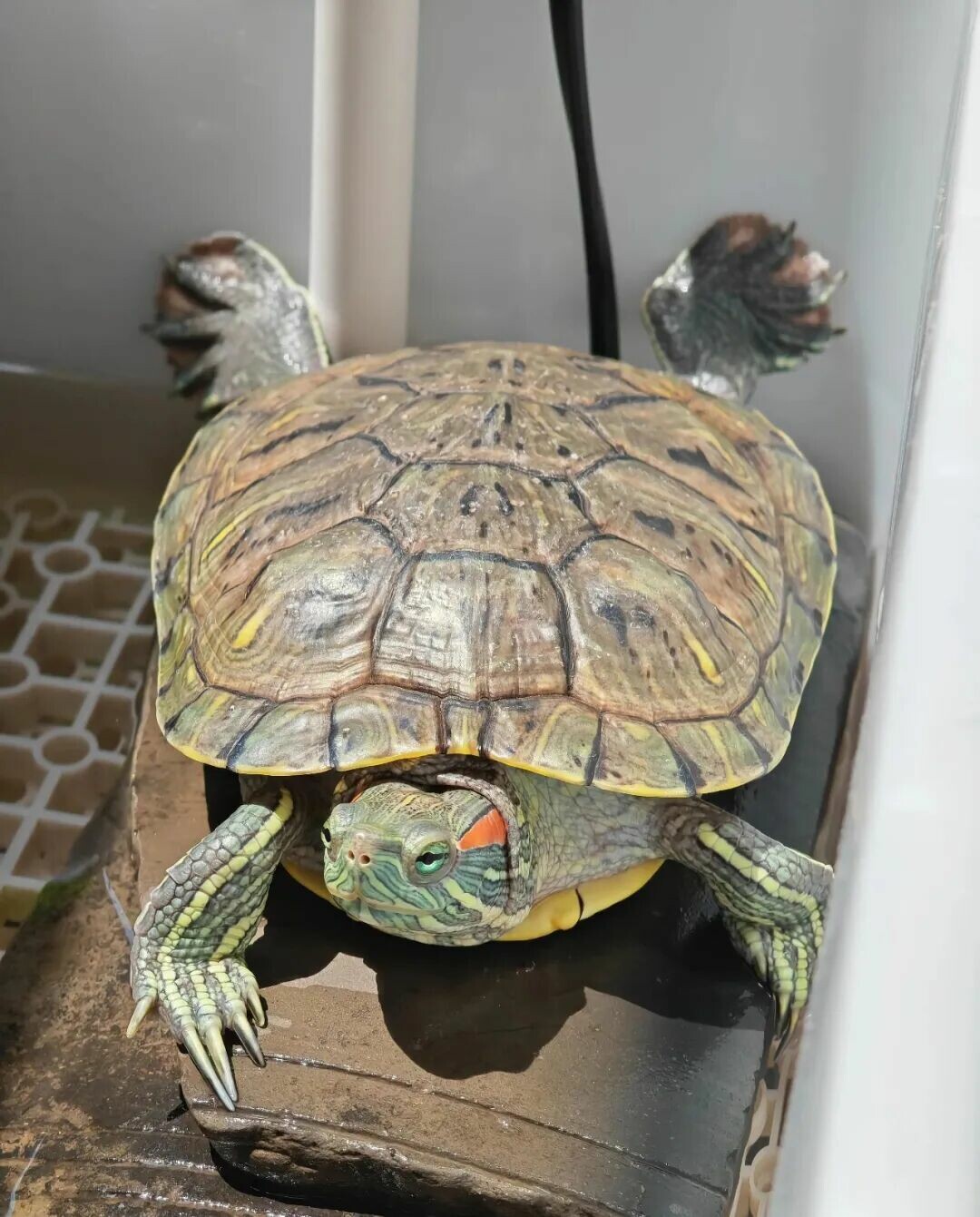
- The “Completely Letting Go” Pose (Extreme Relaxation): If you see your turtle with its limbs and head completely limp and dangling, as if it has “croaked” (a slang term for death or lifelessness), don’t be alarmed! This is actually a sign of the highest level of trust and relaxation. It means the turtle feels 100% safe and secure in its environment, with no defenses up.
- The “Free-spirited” Pose (Comfort and Peace of Mind): Similarly, if a turtle sleeps with its limbs and neck stretched out, it’s a clear sign that it feels comfortable and content.
Underwater Sleep of Aquatic and Semi-aquatic Turtles
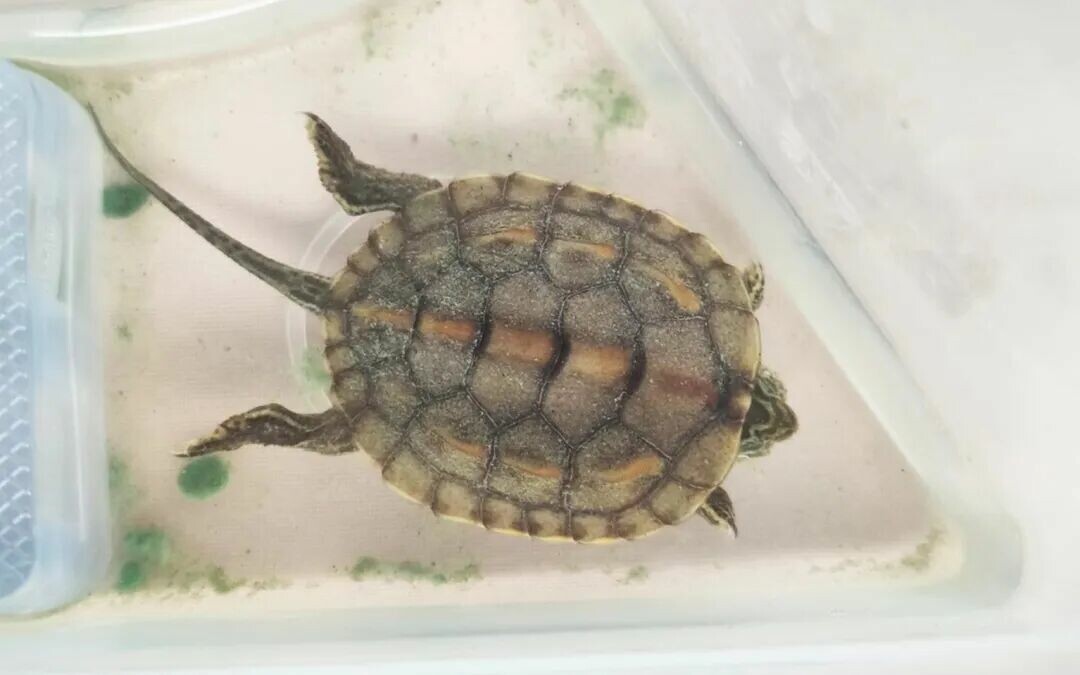
Many people assume turtles only sleep on land, but that’s not the case. Both aquatic and semi-aquatic turtles have mastered the amazing ability to sleep underwater, and they can do so for several hours at a time. So, how do they manage to breathe?
It turns out that turtles have a special lung structure that allows them to store a large amount of air. When sleeping underwater, their metabolism slows down, reducing their oxygen demand. The air stored in their lungs is sufficient to sustain them. Occasionally, they might surface for a quick breath before diving back down to continue their deep slumber.
The Nictitating Membrane: The Reason for White Eyes During Sleep
This is the point that causes the most misunderstanding and anxiety for owners! When you see a semi-transparent white film covering your turtle’s eyes as it sleeps, don’t immediately assume it’s White Eye Disease. This white layer is the turtle’s nictitating membrane (or third eyelid), which acts as its “natural eye mask.”
Function 1: Protecting the eyes. On land, the membrane prevents dust from entering and keeps the eyeballs moist. Function 2: Underwater vision. Underwater, this membrane also offers protection while still allowing for blurry vision.

This membrane becomes more noticeable, especially during the deep sleep stage. How can you distinguish between a normal nictitating membrane and White Eye Disease? The key is to check its condition after it wakes up: if the turtle’s eyes open normally, the membrane retracts, and its eyes are bright and clear, then everything is fine. If its eyes are still swollen, it cannot open them, or there is a white discharge causing them to stick shut after waking, then it might be sick.
Understanding your turtle’s sleep is an important lesson in becoming a responsible “turtle parent.” Its sleeping positions and habits are a barometer of its health and emotional state. The next time you see it sleeping soundly in all sorts of peculiar poses, you can smile knowingly, because that is the best proof of its trust in you and its home.
Original article by KPTer, if reproduced, please cite the source: https://www.kaipet.com/en/white-eyes-sleeping-turtle-sick-discover-4-poses-show-feels-safe




Comments(2)
原来眼皮白色是保护膜!长知识了,下次可以更放心地观察我家龟龟了!
@CriticX:很高兴您了解到关于乌龟眼睑的知识!这确实是很多饲主容易误解的地方。看到自家爱宠放松地休息,真是让人安心又开心!