

Whether or not you have a good relationship with your turtle can be determined by some of its behaviors. The way you interact with your turtle reveals the state of your bond. How can you gauge the depth of your relationship with your turtle? Below are 6 levels of interaction with turtles. Come and see which level you’re at!
Level 1: The “Stranger” Level (Initial Acquaintance Stage)
This situation usually occurs with a newly bought little turtle, about 1–2 weeks after bringing it home. It will immediately run, retreat into its shell, or hide at the slightest sign of trouble. This is a normal phenomenon. At this stage, you have not known it for long or have had basically no interaction with it. With a little patience and nurturing, this stage will pass quickly.
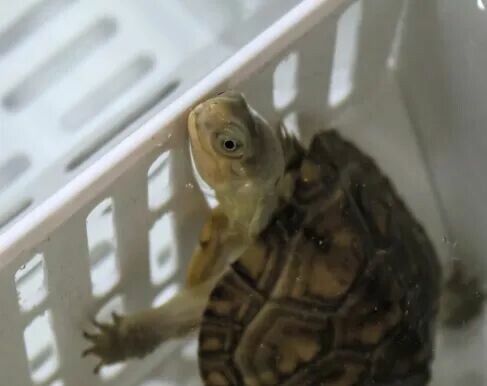
Level 2: The “Awkward Play” Level (Curious and Tentative Stage)
When you start to appear in front of it more frequently and often bring it tasty food, the turtle will become curious. It will start to peek and poke its head around to figure you out, wondering, “What’s the deal with this fellow who always brings food?” At this stage, you will often find the turtle staring at you. If you make a slightly large movement, it will slip away, but it will soon be unable to resist its curiosity and will stick its head out to look at you again. This also signals that your relationship is about to enter the next stage.
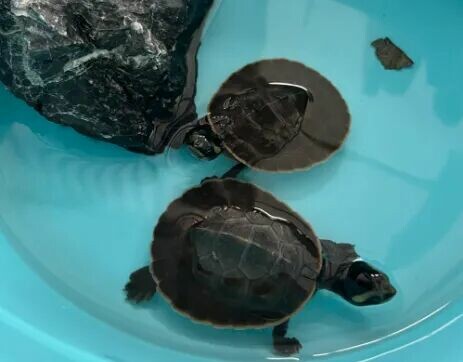
Level 3: The “Familiar Face” Level (Initial Recognition Stage)
As soon as your figure appears, it will crawl or swim towards you, unable to resist craning its little head to stare at you, checking to see what delicious food you’ve brought it today. At this point, it won’t flee even if you make larger movements; after all, you are its feeder. However, at this stage, if you place the turtle on your hand, it will still struggle and attempt to escape.
Level 4: The “Eager Welcome” Level (Snack Buddy Stage)
At this time, as long as you are holding food in your hand, your turtle will scamper over eagerly. In the water, it will swim with vigorous splashing. Seeing you is like seeing the “God of Wealth”; it will rush towards you. Now, when you hold it in your hands, it won’t run away. When you touch its neck and head, it won’t retract them, letting you touch it as you please.
Level 5: The “Dog-Turtle” Level (Inseparable Stage)
This situation mainly occurs when you let the turtle roam freely at home. It likes to follow you and watch you, as if you’re raising a “little shadow.”Whether there’s food or not, it loves to stick to you. Congratulations, you have now raised 1 “little shadow.”
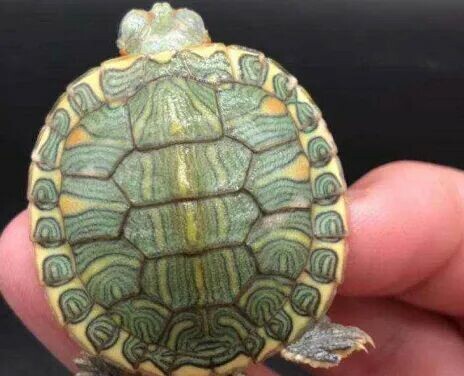
Level 6: The “Freakishly Close” Level (Deep Trust Stage)
Sometimes, when you have nothing to do, you like to take the turtle out, chat with it, and feed it. Occasionally, you can take it out for a “walk,” gently stroking its carapace, and the turtle enjoys it completely without trying to escape. This level is generally difficult to achieve because turtles are typically timid. Furthermore, some turtles can be very aggressive. For new turtle keepers, you must not do this, to avoid causing the turtle a stress response (the non-specific response of the body to internal or external environmental stimuli).
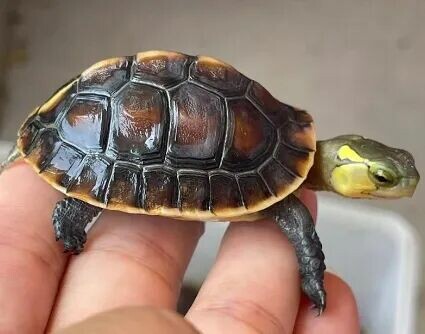
Conclusion: Raising a turtle requires sufficient patience and time. Additionally, it’s important to interact with them more in your daily routine to build a good relationship.
Original article by 搬运工, if reproduced, please cite the source: https://www.kaipet.com/en/strong-bond-turtle-6-relationship-levels-gauge-acceptance







Comments(2)
This breakdown is so helpful! Which level best describes your bond with your turtle? Any specific tips for building trust?
@CriticX:We’re thrilled you found this breakdown helpful! Building trust with a turtle truly requires patience and consistent, positive interactions, often involving food, as detailed in the article. We encourage our community to share their experiences and tips on which level they feel they’re at!