


Canine parvovirus is an acute infectious disease of dogs. Clinically, affected dogs most often present with hemorrhagic enteritis or non‑suppurative myositis as their principal features. In some outbreaks, the infection rate may reach 100%, with a mortality rate of 10–50%. In 1982, researchers at the People’s Liberation Army Veterinary University first isolated this virus in the Changchun region, confirming that the disease also occurs in China. The parvoviruses of dogs, cats, and minks share a degree of antigenic relatedness.
Infected dogs are the primary source of transmission. Their feces, urine, vomitus, and saliva contain the highest viral loads. They continuously shed the virus, infecting other healthy dogs. Recovered dogs may continue to excrete virus in their feces for extended periods. Therefore, once the virus appears in a kennel, it is extremely difficult to eradicate completely.
Besides dogs, wolves, foxes, and raccoons may also become naturally infected. Transmission occurs primarily via direct or indirect contact.
Canine parvovirus is highly resistant to environmental factors: it can survive for one hour at 60 °C, and remains infectious in both mildly acidic and alkaline conditions. On feces and other contaminated solids, the virus may survive for months or even years; in cold environments, infectivity can persist indefinitely. Effective disinfectants include 0.5% formalin, 0.5% peracetic acid, and 5–6% sodium hypochlorite.
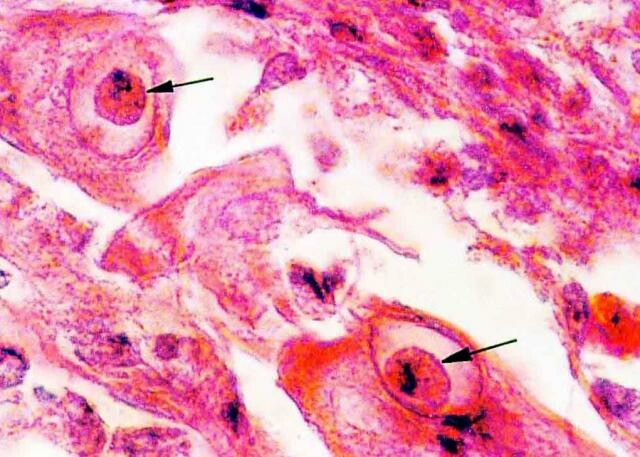
Key Points in Diagnosis
Epidemiological Features
There is no clear seasonality, though cases are somewhat more frequent in cold winter months. Recently weaned puppies often develop the “myocarditis syndrome,” while juvenile dogs more commonly present with the “enteritis syndrome.”
Clinical Manifestations
The disease clinically manifests in two main forms: the enteritic form and the myocarditic form.
Enteritic Form
- Incubation period: 7–14 days.
- Initial signs: Vomiting followed by diarrhea. Feces are yellow to gray‑yellow, containing abundant mucus and pseudomembranes.
- Day 2–3: Feces become “tomato‑juice‑like,” streaked with blood and emitting a characteristic foul odor.
Affected dogs rapidly become dehydrated. They exhibit depression, anorexia, and fever exceeding 40 °C, accompanied by increased thirst. In later stages, body temperature may fall below normal; mucous membranes appear pale; the tail and hindquarters are often soiled with feces; in severe cases, the anus becomes flaccid and gaping.
Myocarditic Form
Puppies develop labored breathing and tachycardia; mucous membranes turn pale; they rapidly waste away and often die suddenly.
A preliminary diagnosis can generally be made based on the epidemiological features and clinical signs described above. Clinicians should pay particular attention to whether vomiting and diarrhea are present.
For definitive diagnosis, collect fresh diarrheal feces early in the course of disease. Mix with 0.5% porcine erythrocyte suspension at 4 °C and observe for hemagglutination. If necessary, submit fecal samples for electron microscopy to confirm the presence of viral particles.
Prevention and Control
Vaccination
- Routine immunization: Inactivated vaccines against canine parvovirus produced domestically are usually combined with other vaccines. When using a canine pentavalent live attenuated vaccine, administer three doses to dogs aged 30–90 days, and two doses to dogs older than 90 days, with each dose given 2–4 weeks apart. Each injection is 2 mL; thereafter, give a booster every six months.
- Maternal antibody interference: Maternal antibodies in puppies can reduce vaccine efficacy. The pentavalent vaccine developed by the People’s Liberation Army Agricultural and Animal Husbandry University uses a parvovirus strain isolated from raccoon dogs, which shows strong resistance to maternal antibody interference; thus, it can be administered according to the standard canine distemper vaccination schedule.
Isolation and Disinfection
- Outbreak response: Upon identification of an outbreak, immediately isolate affected dogs. Disinfect kennels and feeding equipment repeatedly using 2–4% caustic soda, 1% formalin, 0.5% peracetic acid, or 5–6% sodium hypochlorite. Dogs for which recovery is deemed impossible should be humanely euthanized, and their remains incinerated or buried deeply.
Treatment
Therapeutic Principles
- Dogs with the myocarditic form deteriorate rapidly and often die before treatment can take effect.
- Dogs with the enteritic form, if treated promptly and appropriately, can have their mortality rate significantly reduced. Early in the disease, combine administration of hyperimmune serum with supportive measures—cardiotonic drugs, fluid therapy, antibacterial and anti‑inflammatory agents, anti‑shock therapy, and enhanced nursing care—to improve survival rates.
Therapeutic Measures
Hyperimmune Serum
Early use yields the best results. Once the disease is confirmed in a kennel, immediately administer hyperimmune serum or convalescent canine serum to other affected dogs. Recommended dosage: 0.5–1 mL per kg of body weight for hyperimmune serum; 0.5–2 mL per kg for convalescent serum; administer daily for 3–5 days. Concurrent use of hyperimmune serum with antibacterial and anti‑inflammatory agents may further enhance efficacy.
Fluid Therapy
Dehydration is a leading cause of death in affected dogs, making fluid replacement a cornerstone of treatment.
Intravenous Fluid Replacement
Choose fluid type and volume according to the degree of dehydration and the dog’s overall condition. Generally, administer 60 mL/kg body weight per day via IV infusion:
- 25% Dextrose solution: 5–40 mL
- Vitamin C: 2–10 mL
- Energy supplement mixture: 5–20 mL
Give each infusion slowly by IV drip, once or twice daily. Rigorously monitor total infusion volume and rate, and assess cardiac function to avoid fluid overload and treatment failure. In cases of severe vomiting and diarrhea where electrolyte and acid–base disturbances must be corrected, use:
- Lactated Ringer’s solution: 50–500 mL
- 25% Dextrose solution: 5–40 mL
- Hyoscyamine hydrobromide injection: 0.3–1 mL, twice daily
Oral Rehydration
If the dog is anorexic but not vomiting—and still shows thirst or some appetite—offer an oral rehydration solution composed of:
- Sodium chloride (NaCl): 3.5 g
- Sodium bicarbonate (NaHCO₃): 2.5 g
- Potassium chloride (KCl): 1.5 g
- Glucose: 20 g
Dissolve in 1 000 mL water and allow the dog free access to drink; deep rectal infusion may also be used.
Peritoneal Fluid Replacement
If IV access is difficult, administer fluids intraperitoneally at 70 mL/kg body weight.
Antibacterial and Anti‑inflammatory Therapy
Broad‑spectrum antibiotics may be used, but avoid prolonged courses to prevent disruption of normal gut flora, which could delay recovery of intestinal function.
- “Antitoxin lyophilized powder” and “Antitoxin No. 1 injection” (produced by Heilongjiang Veterinary Pharmaceutical Factory) have demonstrated good efficacy against this disease.
- Dogs ≤ 15 kg: 1 vial lyophilized powder IV once daily
- Dogs > 15 kg: 2 vials IV once daily
- Concurrently administer Antitoxin No. 1: 10–30 mL per day
- “Diarrhea‑stop tablets” (enhanced Xiayinning tablets), a combined Chinese‑and‑Western broad‑spectrum antimicrobial and antiviral preparation, is also effective.
- 2–4 kg dogs: 1–2 tablets orally per dose
- 5–10 kg dogs: 2–4 tablets orally per dose
- Give 1–2 doses daily; double the dosage for virus‑induced diarrhea
Antiemetic Therapy
For severe vomiting, give intramuscular injection of:
- “Emol” or “Metoclopramide” (e.g. Gastropan): 0.3–2 mL per injection
Anti‑shock Therapy
In cases of pronounced shock, administer intramuscularly:
- Dexamethasone (Flumethasone): 5–15 mg
- Hyoscyamine hydrobromide injection: 0.3–1 mL
Enhanced Nursing Care
- Keep affected dogs warm at all times.
- During diarrhea, withhold high‑protein and high‑fat foods such as milk, eggs, and meat.
- Provide easily digestible, low‑residue feed to reduce gastrointestinal workload and improve recovery rates.
Original article by KPTer, if reproduced, please cite the source: https://www.kaipet.com/en/pet-dog-common-disease-diagnosis-treatment



Comments(2)
This guide is so comprehensive! Beyond the medical treatments, what practical home nursing tips have you found most helpful for a recovering parvo puppy? Share your experiences!
@CriticX:Thank you, CriticX! We’re pleased our guide is comprehensive. While the post focuses on medical treatment and basic nursing, your question about additional home care tips is excellent. We encourage other pet parents to share their valuable experiences here for recovering parvo puppies!