

Fish oil and krill oil may appear quite similar at first glance, both being marketed primarily for enhancing pet coat health. However, in reality, the differences between them are significant. Choosing the wrong one may not only render the supplement ineffective but could also increase the burden on the liver. Fish oil has a relatively simple composition, mainly consisting of Omega-3, Omega-6, and other components. Krill oil, while also rich in Omega-3, contains additional ingredients such as Astaxanthin and Phosphatidylcholine, along with a small amount of Omega-6 and other components.

Higher Omega-3 Content in Fish Oil
When considering only the Omega-3 aspect, fish oil is far more cost-effective than krill oil. This is because fish oil can be processed to achieve a very high Omega-3 concentration; concentrated fish oil products can exceed 90%, and even reach as high as 97%. In contrast, krill oil typically contains only 30%-40% Omega-3, with the highest levels being around 56%. The disparity in Omega-3 content between the two is thus very significant.
Nevertheless, the Omega-3 in krill oil is quite special – its fatty acids are attached to a phosphate group, which leads to better bioactivity and higher absorption efficiency. However, when choosing fish oil, one can opt for either the TG Type or rTG Type, whose absorption rates are very similar to those of krill oil. Therefore, if the goal is solely to supplement Omega-3, fish oil is more cost-effective.

Broader Benefits of Fish Oil
Nonetheless, taking such products is not just about supplementing Omega-3. The foundation of a healthy coat is multifaceted, and even a pet’s mood can affect its hair health. Currently, pet coat enhancement products predominantly feature fish oil, mainly because fish oil contains higher levels of DHA, which benefits brain health, joint improvement, and immune system enhancement.
“Fish oil provides a more comprehensive supplementation of DHA, which plays a critical role in pet brain development and vision protection.”
This is not to dismiss the benefits of krill oil, but rather to point out that current research on krill oil is not as extensive. Therefore, if you ask whether krill oil possesses these functions, I tend to believe it does – albeit with less extensive research compared to fish oil. After all, krill oil only started gaining popularity gradually after the “Nuclear Wastewater Discharge Incident”.
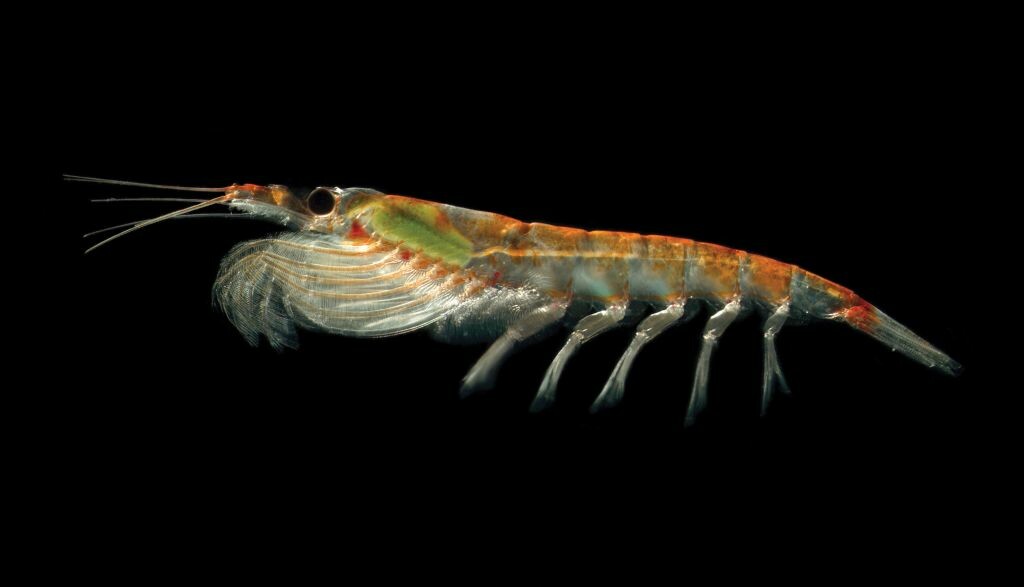
Unique Advantages of Krill Oil
Krill oil also has its very unique strengths. Krill, being a type of plankton at the bottom of the marine food chain, has an extremely low heavy metal content in its body. The phospholipid form Omega-3 in krill oil can be directly absorbed by cells without needing to be converted in the liver as fish oil does, which means krill oil places less burden on the liver.
Krill oil products contain Astaxanthin, an ingredient commonly added to skincare and health supplements for many young women. Astaxanthin is an exceptionally powerful antioxidant, and currently, among pet food products, only krill oil provides this component.
“If you are willing to invest more in obtaining an adequate amount of krill oil, its overall benefits may actually be more comprehensive and enriched compared to fish oil.”
Choosing the Right Product for Your Needs
| Product Type | Main Advantages |
|---|---|
| Fish Oil | High Omega-3 content, richer in DHA, more cost-effective |
| Krill Oil | Higher absorption rate, contains Astaxanthin, less burden on the liver |
If your goal is merely to supplement some high-quality Omega-3, then fish oil is more cost-effective. However, if you are looking for additional benefits from such products, then krill oil might be the better choice. That concludes the advice for today. If you are interested, in the next article we can discuss key points to consider when selecting fish oil and krill oil.
Original article by KPTer, if reproduced, please cite the source: https://www.kaipet.com/en/pets-fish-oil-krill-oil-analysis-core-differences



Comments(2)
This was super insightful! I hadn’t considered the liver burden. For pets with sensitive livers, would krill oil always be the better choice?
@CriticX:That’s a great point! As the article mentions, krill oil does place less burden on the liver due to its absorption method. For pets with sensitive livers, it can be a beneficial choice. However, we always recommend consulting your veterinarian for tailored advice on specific health conditions.