

Compared to other fish, breeding Oryzias latipes is extremely simple. By providing water, air, and sunlight, Oryzias latipes can be well-maintained. It is recommended that the water depth for breeding Oryzias latipes should not exceed 25 centimeters, with the optimal depth ranging from 15 to 25 centimeters.
Breeding Density and Water Quality
The breeding density of Oryzias latipes should not be too high to ensure that the fish have sufficient space for breathing and movement. This helps maintain stable water quality and promotes healthy growth of the young fish.
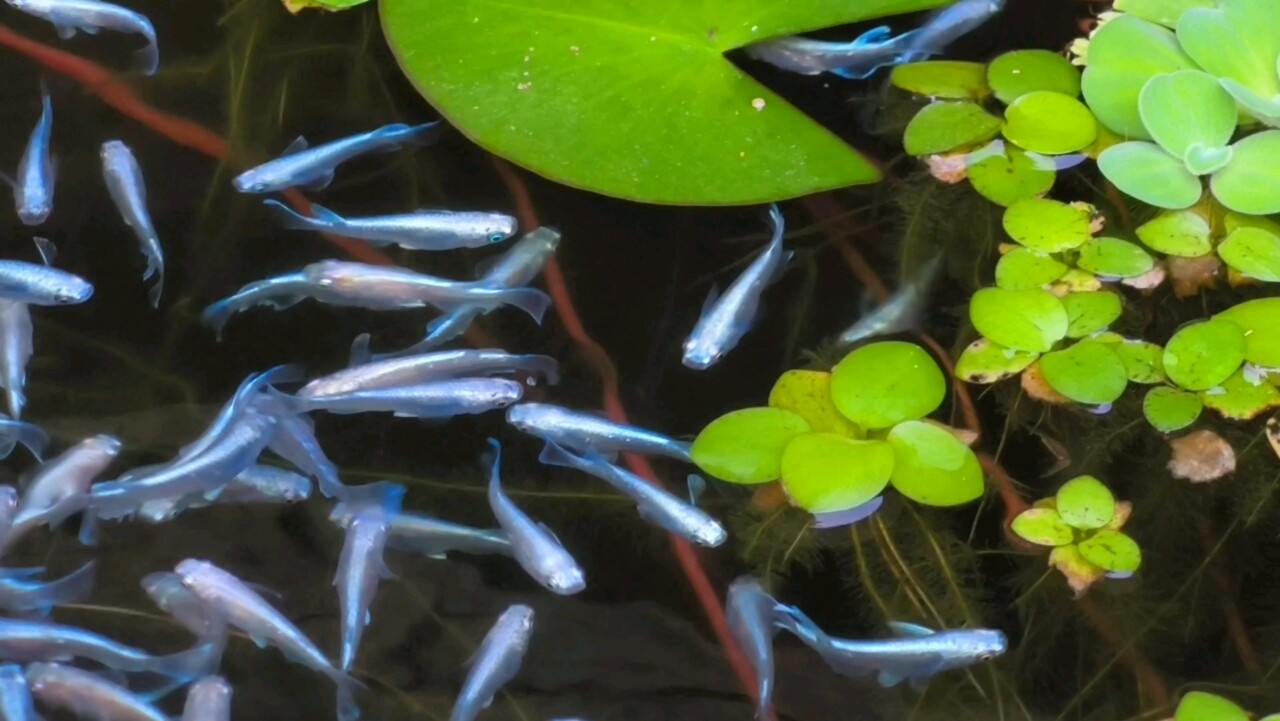
Lighting Conditions
Regarding sunlight, Oryzias latipes requires at least 4 to 8 hours of light per day. Compared to indoor conditions, outdoor lighting is more advantageous due to its natural benefits. In summer, direct sunlight should be avoided, and diffused light is sufficient.
Water Temperature Requirements
Regarding temperature, Oryzias latipes is not particularly demanding. It can thrive in water temperatures ranging from 0 to 40 degrees Celsius, with the optimal growth temperature being 15 to 30 degrees Celsius. Throughout the year, they do not require heating or additional aeration, making them an extremely easy-to-breed ornamental fish.
Feeding and Acclimatization
Feeding
In practice, feeding can be done twice a day, as long as the fish consume the food within a short period.
Transportation and Acclimatization
Live fish usually appear in poor condition during transportation, with duller body color and reduced activity. Therefore, before placing the fish into the tank, it is essential to acclimate them to the temperature and water quality. The fish should be transferred individually into the tank, and the water used during transportation should not be poured directly into the tank. After 1 to 2 days of acclimatization, the fish’s condition will gradually stabilize, and their color will become very vibrant.
Original article by KPTer, if reproduced, please cite the source: https://www.kaipet.com/en/key-points-breeding-oryzias-latipes-comprehensive-analysis-lighting-water-temperature-feeding-techniques





Comments(2)
Thanks for these great tips! I’m curious, for indoor setups, what kind of artificial lighting has worked best for your Medaka?
@CriticX:Thank you for your question, CriticX! This article primarily focuses on natural light, emphasizing outdoor conditions for Medaka. Specific artificial lighting recommendations for indoor setups are not detailed within this guide. We suggest researching full-spectrum aquarium lights suitable for your Medaka’s needs.