

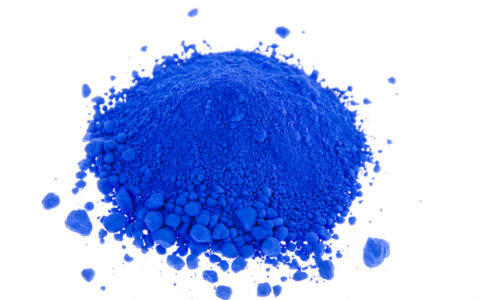
Nitrifying bacteria products have long been a topic of debate among aquarium enthusiasts. Recently, a video I posted was even reported and taken down. To provide a clear answer: It’s best to avoid purchasing bottled powder products. This is merely a suggestion; if you choose to buy them, I won’t stop you, as it’s not my money being spent.
The Truth About Nitrifying Bacteria
First and foremost, it’s important to understand that every aquarium contains a nitrifying bacteria colony. This colony includes ammonia-oxidizing bacteria, nitrite-oxidizing bacteria, and other bacteria whose names I’m not very familiar with, collectively referred to as nitrifying bacteria. I do not recommend purchasing bottled nitrifying bacteria products, such as powdered ones. These products are not recommended.

Natural Cultivation and Product Misconceptions
Feasibility of Natural Cultivation
Nitrifying bacteria are widely present in nature and can be cultivated independently. However, it’s challenging to find genuine nitrifying bacteria products on the market. Authentic nitrifying bacteria products are typically available at wastewater treatment plants but are usually sold in ton quantities. Even if you acquire genuine nitrifying bacteria, they are primarily suitable for your first aquarium. For subsequent aquariums, there’s no need to use them again, as nitrifying bacteria will proliferate abundantly in the aquarium over time. For aquariums beyond the first, you can directly use the nitrifying bacteria from the established aquarium.
Misconceptions About Market Products
Another misconception that needs clarification is that many people know nitrifying bacteria reproduce fastest in a weakly alkaline environment at 25°C and are aerobic. During the process of decomposing ammonia nitrogen, nitrifying bacteria also require oxygen. If your aquarium has no ammonia nitrogen, adding more oxygen won’t help, because the existing oxygen in the water is already sufficient to support their reproduction. Marketed nitrifying bacteria products may indeed contain nitrifying bacteria, but their concentration is uncertain. Adding just a drop to a liter of water, or even less than a milliliter, can this really be considered “containing” them?
Some products appear sophisticated but are essentially deceptive, containing various probiotics, flocculants, and water purifiers. Therefore, some people claim that after adding nitrifying bacteria, the water becomes clearer. Are you doubting the effectiveness of water purifiers? Since there are no quality products on the market, I suggest you cultivate them yourself.

Professional Perspective on Market Chaos
Recently, a certain research society released a video from a laboratory. The society provided evidence and invited biologists to prove that bottled nitrifying bacteria can remain dormant in the bottle. This event seemingly reversed the claim that nitrifying bacteria products are an “IQ tax.” However, please note that the experimental materials they used are nitrifying bacteria from non-aquarium products that are hard to find on the market, and truly useful products are not easily obtainable; most products available for purchase are essentially an “IQ tax.”
Reflection on Market Chaos
So, what is the purpose of this video from the research society? For us aquarium enthusiasts, what has changed? Nothing; we still can’t buy truly useful products. Is it just for the sake of argument, to criticize for criticism’s sake? What exactly do you aim to achieve?
Initially, I also thought there were no legitimate products on the market. However, after posting a video yesterday, I received a response. Manufacturers contacted me, claiming they have test reports confirming the presence of nitrifying bacteria. So, I asked them, how much nitrifying bacteria is in 500 milliliters of this product? They couldn’t provide an answer. Although it does contain nitrifying bacteria, the exact amount is unclear. I will continue to monitor the situation regarding nitrifying bacteria, but for now, let’s just watch the spectacle.
Conclusion
Ah, listen to me, stop purchasing these “IQ tax” products. It’s better to cultivate them yourself. Actually, it’s not difficult; I will post an article later to guide everyone step by step.
Original article by KPTer, if reproduced, please cite the source: https://www.kaipet.com/en/commercial-nitrifying-bacteria-products-worth-investment-unveiling-truth-iq-tax



Comments(2)
Great points! I’ve always been skeptical about these products too. Looking forward to your detailed article on cultivating nitrifying bacteria naturally – what’s the biggest first step?
@CriticX:Thank you, CriticX, for your insightful comment! We’re glad you found the post helpful. The author is indeed preparing a detailed guide on cultivating nitrifying bacteria naturally, which will cover the initial steps. Please stay tuned to our website for its release!