

Do you remember the great turtle that carried Tang Sanzang and his disciples across the river in *Journey to the West*? Although it’s a mythical story, it has a real-life prototype. This prototype is not a tortoise, nor a common soft-shelled turtle, but an even more ancient and rare creature—the Yuan (yuán).

The “Aquatic Living Fossil” from the Jurassic Period
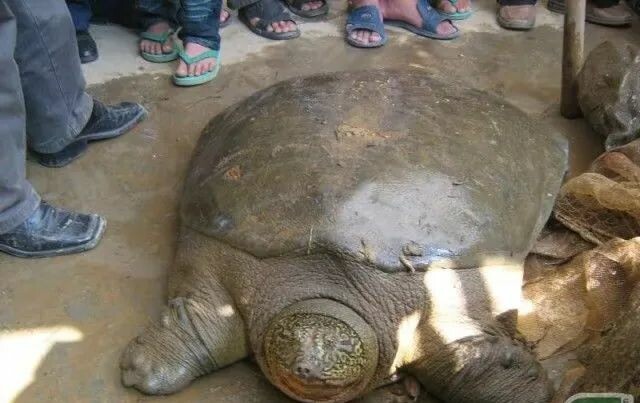
The ancestors of the Yuan existed as early as 175 million years ago in the Jurassic period, having witnessed the rise and fall of the dinosaurs. As the largest member of the Trionychidae family (soft-shelled turtles), it can reach a length of 2 meters and weigh over 100 kilograms, looking exactly like something that has walked out of a myth.
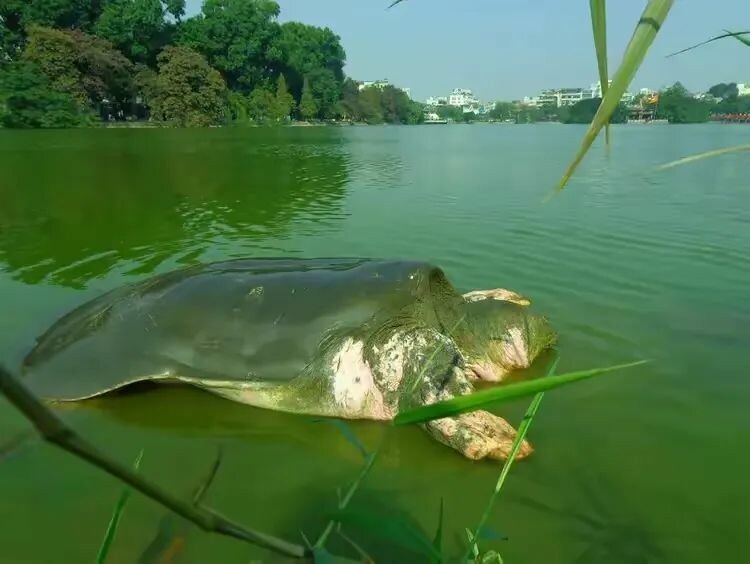
The “Spiritual Creature” Hidden in Mythology
The ancients’reverence for the Yuan was long ago etched into myths and legends; the ancients had many stories about “divine turtles.”
In the story of Nüwa mending the sky, the four legs of a “great turtle” were cut off to serve as the four pillars supporting the heavens; the one capable of holding up the sky and earth was precisely the enormous Yuan. When Yu the Great controlled the floods, he carved a stone Yuan with a mountain-cleaving axe. This stone Yuan was called “Zhenze Shenzhong” (Divine Weight of the Shaking Marsh), also known as the “Demon-Suppressing Stone,” and was used to subdue the water dragon of Lake Tai.

Furthermore, the jade seals of ancient emperors were often adorned with a “Yuan-shaped knob,” symbolizing its meaning of “steadiness and longevity.” This cultural connection spanning millennia has made the Yuan a “living symbol” for the dialogue between humanity and nature. From this perspective, the Yuan seems like a creature from mythology. In fact, the Yuan still lives in the real world.
General Knowledge About the Yuan
Distribution: They are distributed in countries such as Myanmar, Malaysia, Indonesia, the Philippines, Thailand, India, and China. However, the global wild population of the Yuan is already very small, and it is in an endangered state.
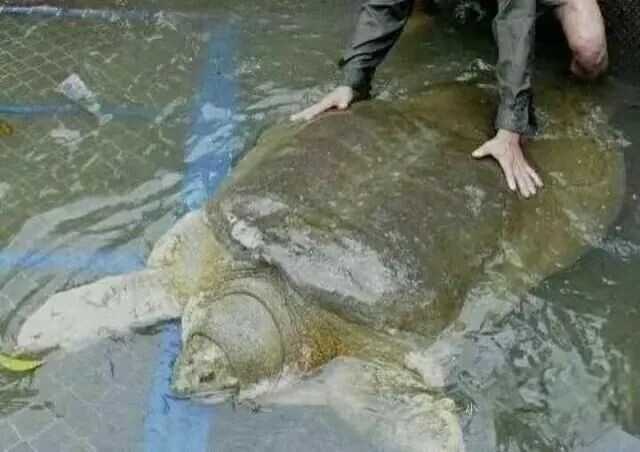
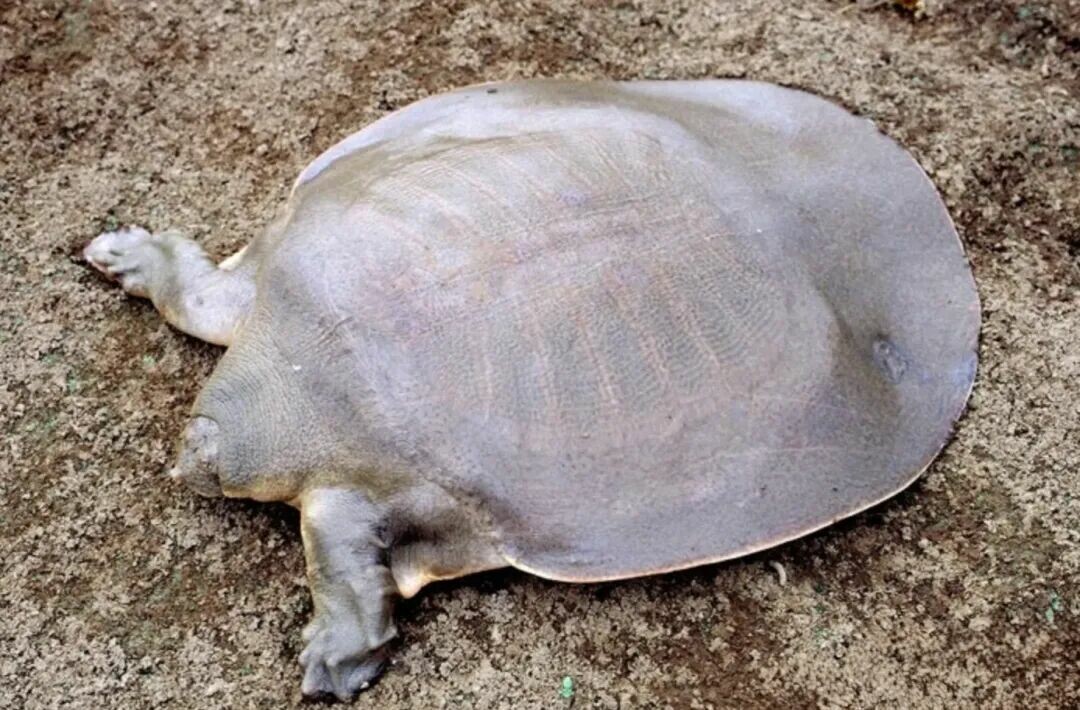
Physical Characteristics: The carapace of the Yuan, unlike that of a tortoise, does not have hard, horny scutes but is covered with soft, leathery skin, somewhat resembling a large soft-shelled turtle. The difference is that the Yuan‘s head is rounder than that of a common soft-shelled turtle, and its snout is short and blunt.
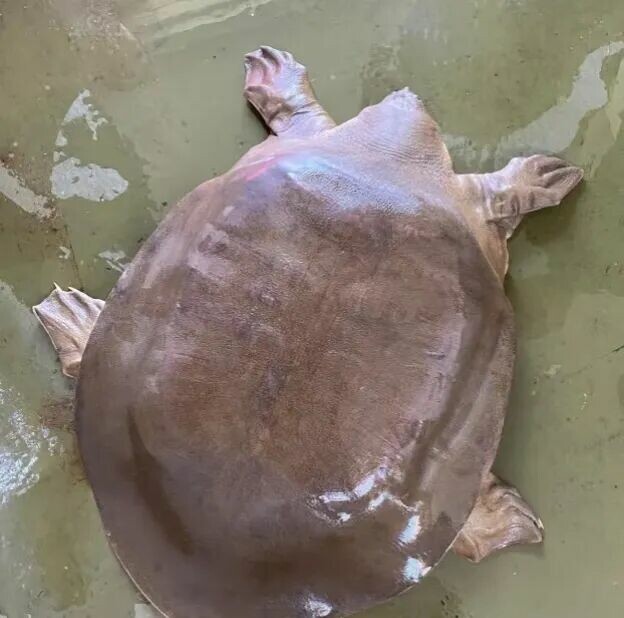
The presence of a Yuan often signifies the health of an entire river: the Yuan feeds on fish, shrimp, snails, and clams, controlling the population balance of aquatic organisms.
The Difference Between the Yuan and the Banbie (Yangtze Giant Softshell Turtle)
The Yuan and the Banbie are easily confused, as both resemble giant soft-shelled turtles. When young, they are often mistaken for common soft-shelled turtles and eaten by mistake.
Yuan (Asian giant softshell turtle): Head is broad and round, snout is short and blunt, skin is thick and wrinkled, there are no distinct markings on the head, and its color is similar to its carapace (grayish-brown or olive).
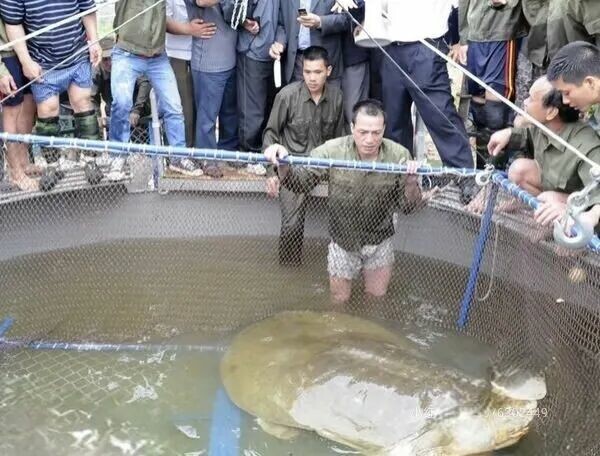
Banbie (Yangtze giant softshell turtle): Head is relatively slender, snout is more pointed, there are yellow or orange markings on the head and neck (a key feature), and the markings are irregular in shape but clear. The maximum recorded adult carapace length for a Banbie is 1.5 meters, with a weight of 50 to 100 kilograms. It is slightly smaller than the Yuan but more robust. The current survival status of the Banbie is even more precarious than that of the Yuan, with its population in the single digits.
Striving to Protect Endangered Species
“The Yuan spent 175 million years adapting to nature, but it never expected that humans would destroy the Yuan’s home in just a few decades.”
Although the situation is difficult, fortunately, some people are doing everything they can for the Yuan. In Foshan, Guangdong, at an artificial breeding base for the Yuan run by the Ministry of Agriculture and Rural Affairs, 4 wild Yuan “founding members” have produced over 1,000 offspring.
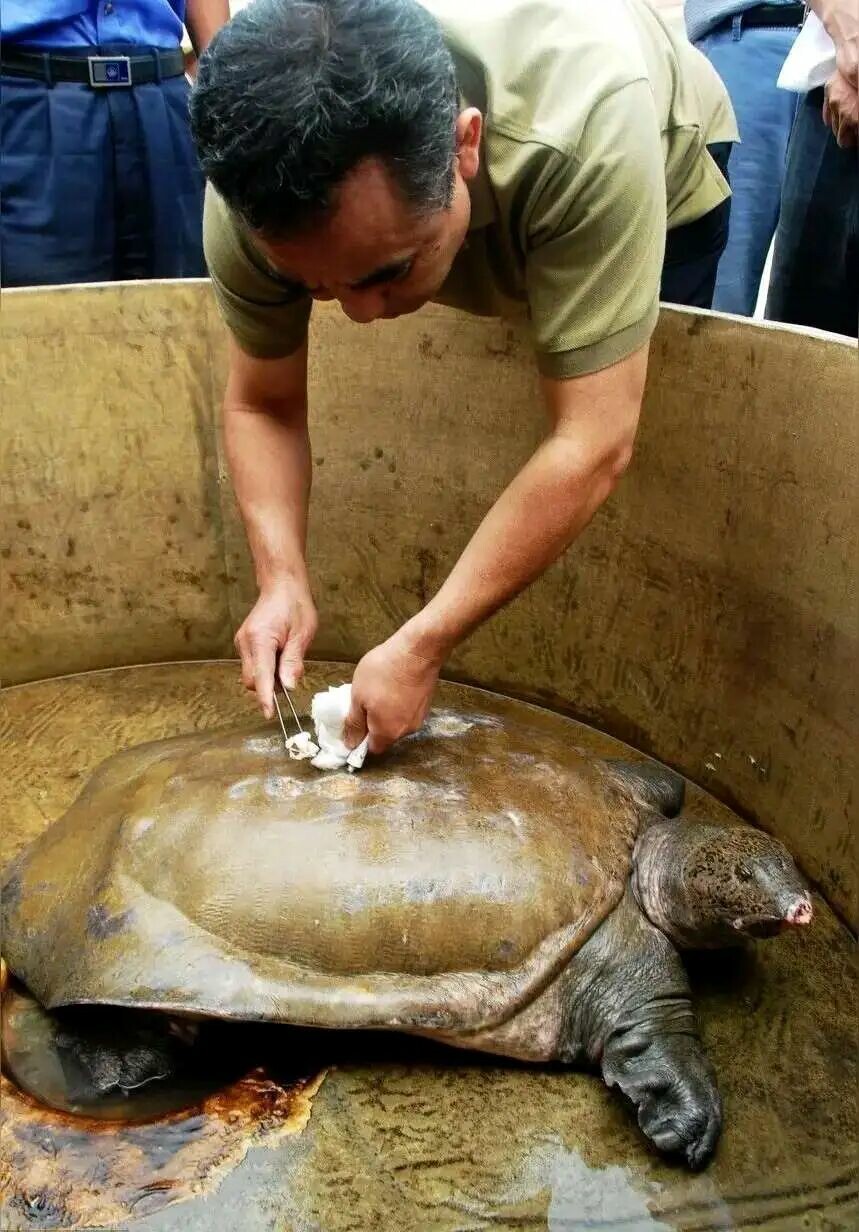
The 20 Yuan that were released back into the wild in 2020 have now grown to weigh tens of kilograms, and satellite trackers show that they are living well in the river channels. We hope that this ancient and mysterious species can survive forever.
Original article by 搬运工, if reproduced, please cite the source: https://www.kaipet.com/en/divine-turtle-journey-west-yuan-unveiling-12-truths-yuan-living-symbol-chinese-culture
Comments(2)
Such an insightful read! I’m curious, what simple steps can we take to support Yuan conservation efforts?
@CriticX:感谢您的阅读和关注!保护中华鳖可从支持官方保护项目、提高大众对野生动物保护的意识,以及拒绝消费非法野生动物制品做起。