

If the ultimate dream for most hobbyists in the semi-aquatic turtle community is to raise an An’yuan (species name), then the ultimate dream for musk turtle enthusiasts is undoubtedly to raise a Narrow-bridged (musk turtle species).
You have your An’yuan dream, and I have my Narrow-bridged dream!
After several introductions by the author, many friends are no longer strangers to the An’yuan, and many hobbyists in the pet turtle community are even more familiar with them than I am.
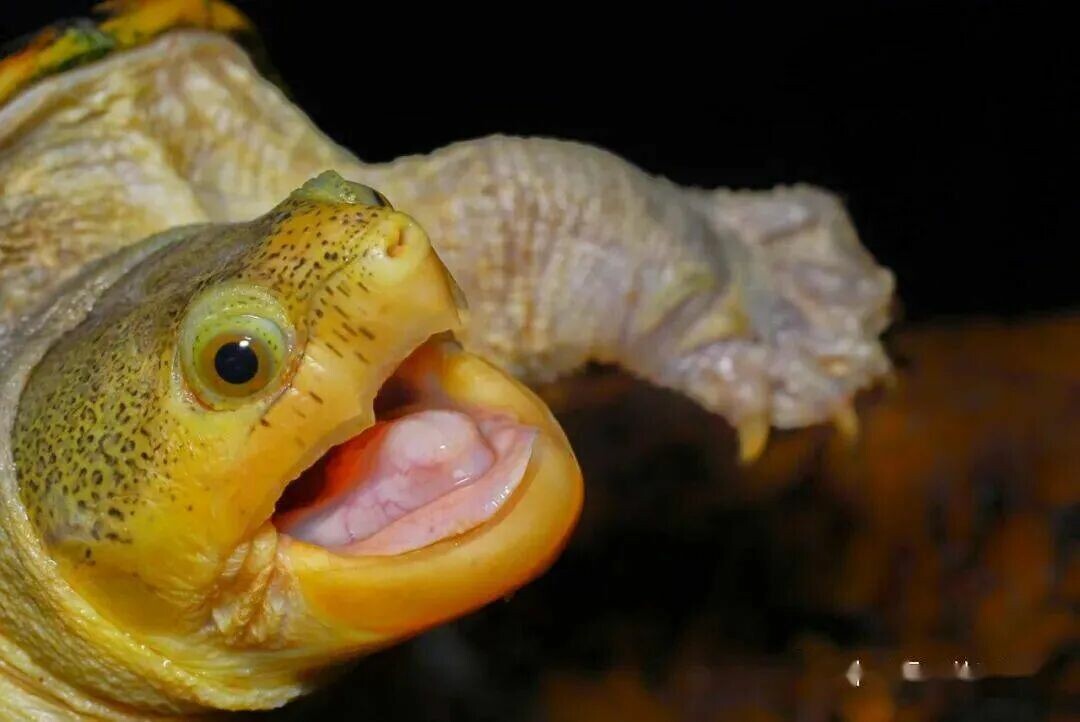
But today’s protagonist is a blessing for enthusiasts in the musk turtle community—the Narrow-bridged Musk Turtle, hailed as the king of musk turtles.
Scarcity and Market Price
The esteemed title “King of Musk Turtles” does not refer to its large size or aggressiveness, but rather its extreme rarity, unique appearance, high difficulty in husbandry and breeding, and its top-tier market price within the musk turtle category. These factors combined have established its irreplaceable “royal status.”
It is worth mentioning that the market price for standard-grade An’yuan hatchlings this year is in the 1,200-1,500 CNY range, while the starting price for Narrow-bridged hatchlings is currently over 2,000 CNY. And here’s a fun fact: it is said that the world’s only albino Narrow-bridged Musk Turtle (a color morph individual) was auctioned for a staggering 3,000,000 CNY.
Appearance and Size
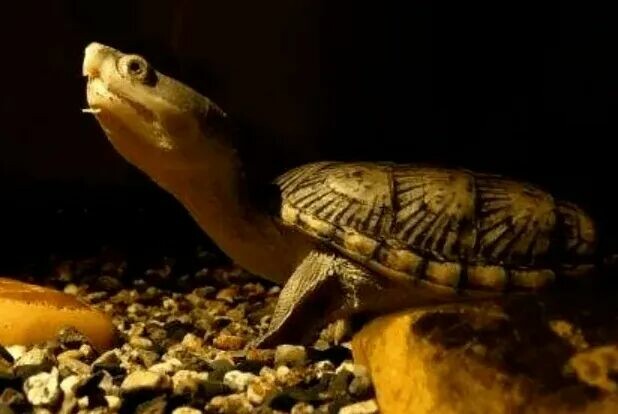
The appearance of the Narrow-bridged Musk Turtle is highly iconic, being both cute and distinctive. It is the only species among musk turtles that can simultaneously satisfy the aesthetic preferences of both “detail-oriented individuals” and “hobbyists who seek individuality.” The carapace of the Narrow-bridged is small and exquisite with a solid texture. Adults only reach a length of 12-15 cm (approx. 4.7 – 5.9 in), yet their shell is hard with clear patterns, giving them an overall compact and sturdy look.
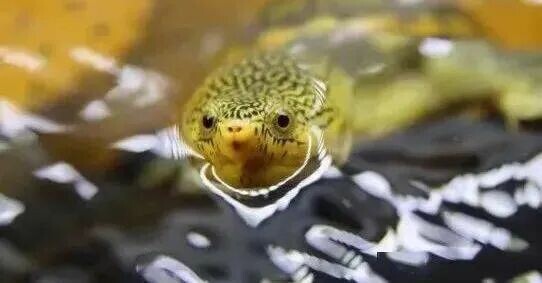
The head pattern of the Narrow-bridged is the “core of its aesthetic appeal” and the key feature that distinguishes it from common musk turtles: the base color of the head is dark gray or black, covered with irregular white, yellow, or orange stripes/spots. The lines vary in thickness and are randomly distributed, making each Narrow-bridged’s head pattern unique. Some individuals may even exhibit top-grade patterns like “symmetrical lines”or a “full white head.” Its ornamental value increases with age, as the patterns become more vibrant and the contrast stronger in adulthood.
Although small, the Narrow-bridged has the demeanor of a “mini beast”—its head is proportionally large, and its eyes are round and expressive. When startled or interacting, it quickly retracts into its shell, but when calm, it extends its head to observe. This sense of contrast between its “small size + fierce look” gives it more “personality and charm” than the docile Common Musk Turtle or the timid Razor-backed Musk Turtle.
Head Patterns and Appearance Quality
From the introduction above, does this feel extremely similar to the pursuits of An’yuan enthusiasts, who also focus on head and carapace patterns?
Just as An’yuan enthusiasts pursue “strongly connected,””sky eye,””Maserati,”and “antler”head patterns, the Narrow-bridged also has different head patterns. These are mainly divided into the reticulated pattern, where fine lines interweave to form a “net-like grid structure”with interconnected and overlapping lines; the spotted pattern, dominated by “dots and small specks”; and the full pattern, composed of a “mix of thick and thin lines” that create a strong sense of contrast.
However, unlike An’yuan enthusiasts who pursue the fine, blade-like carapace lines on their turtles from the subadult to adult stages, the shell shape of the Narrow-bridged Musk Turtle has less potential for development through husbandry. The focus is more on shell color cultivation. Similar to species like the Yellow-throated turtle and the Alligator Snapping Turtle, yes, the shell color of the Narrow-bridged Musk Turtle can develop based on its environment in captivity. Furthermore, with the addition of its special head patterns, the visual impact of combinations like a “yellow base with black lines”or an “orange base with brown lines” makes the Narrow-bridged Musk Turtle even more ornamental.
Husbandry and Cultural Comparison
Coincidentally, the two also align with two different philosophical traditions from their countries of origin. The An’yuan emphasizes meticulous care and a long cultivation period; an adult An’yuan, with its fine, blade-like carapace lines and red-faced, golden-headed patterns, is like a bottle of culturally rich, aged wine, whose mellow and fragrant taste is memorable. In contrast, the intricate head patterns and uniquely splendid radial shell coloration of the Narrow-bridged are more akin to the diversity and free beauty of Western culture.
Of course, due to their different husbandry requirements, they offer different keeping experiences. What they have in common is that both are highly interactive and have a robust constitution, making them suitable to be acquired together.
Interaction and Sharing
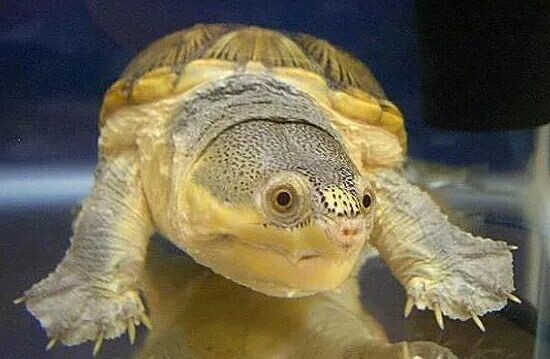
Here, I also welcome netizens to share pictures of your turtles. If you want to learn about a specific turtle species or gain some knowledge, you can also send a private message to the author to share your turtle-keeping journey~
Original article by 搬运工, if reproduced, please cite the source: https://www.kaipet.com/en/anyuan-narrow-bridged-musk-turtle-comparison-appearance-price-husbandry-difficulty






Comments(2)
The description of the Narrow-bridged as a ‘mini beast’ with great personality is so intriguing! Any fun interaction stories?
@CriticX:You’re right, their ‘mini beast’ charm is captivating! We love hearing about unique personalities. We also welcome other hobbyists to share their Narrow-bridged interaction stories with us here!